How to Tell If Eggs Are Bad: Float Test, Smell and Carton Dates
Eggs that float, smell sulfurous or show pink or green whites should be thrown out. The float test, smell test and carton dates explained for bakers.
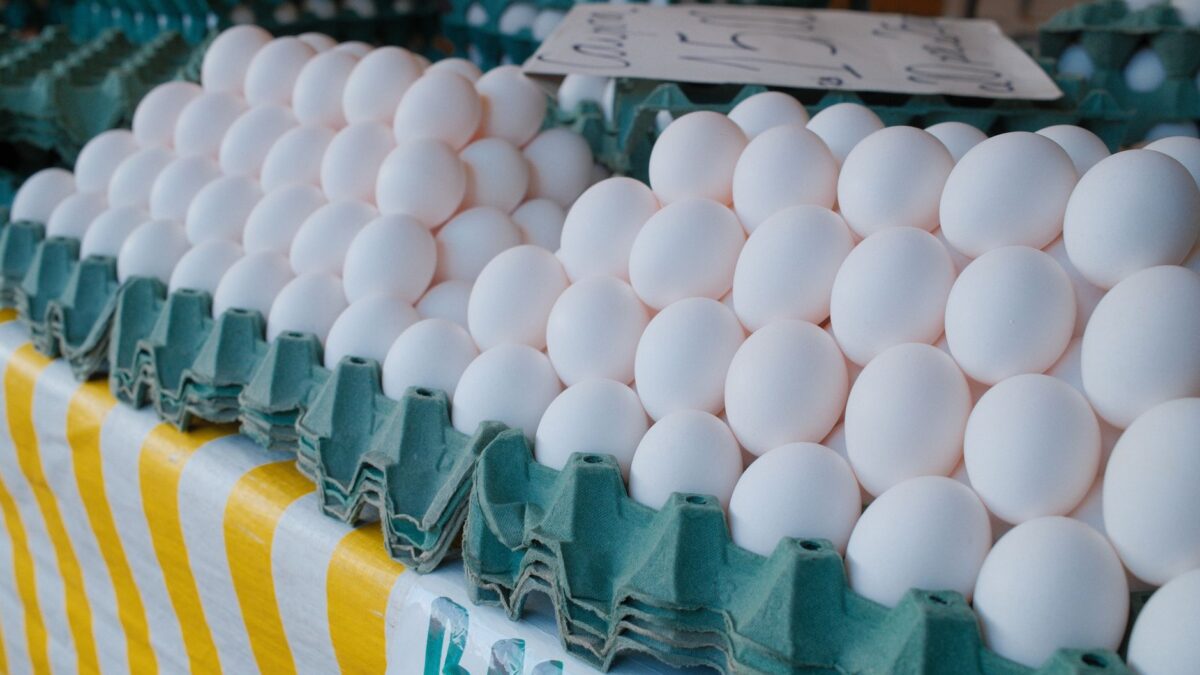
A bad egg usually gives itself away by a sulfur smell when cracked, a pink, green or iridescent white, or a slimy, powdery shell. An egg that floats in a bowl of water is old, and most cooks discard it. A sunken egg that smells normal and looks normal is fine to bake with, provided it was kept cold and the shell was not cracked.
Smell and appearance catch spoiled eggs. Neither one detects Salmonella, which causes no change in odor, taste or look, so storage temperature and cooking temperature matter as much as any test.
How does the float test work?
The float test works because an egg shell is porous: as an egg ages, moisture and gas leave through the shell and air replaces them, so the air pocket at the wide end grows larger.
Fill a tall glass or bowl with cold water, at least deep enough to cover the egg, and lower the egg in gently. Then read the result.
- The egg sinks and lies flat on its side: it is fresh.
- The egg sinks but tilts or stands on its point with the wide end up: it is older but usually still usable. Hard-boil these, since older eggs peel more easily, or use them in baking after a smell check.
- The egg floats: the air pocket is large enough to lift it. Throw it away, or crack it into a separate bowl first and check it before deciding.
The test measures age, not safety. A floating egg can occasionally still be sound, and a sinking egg can be spoiled if bacteria got in through a crack, so the float test never replaces the smell check.
How do you smell and look at an egg to know if it is bad?
Crack the egg into a small separate bowl, never straight into batter, and smell it. A spoiled egg has a sharp sulfur or rotten odor that is hard to miss, and that smell does not cook out.
Look at the contents as well. Discard the egg if you see any of these:
- a pink, green, blue or iridescent tint in the white, which points to bacterial spoilage
- a yolk that is flat, runny and mixed into the white
- a slimy or powdery coating on the shell
- a shell that is cracked or leaking, even when the inside looks fine
Some oddities are harmless. A cloudy white means the egg is very fresh and still holds carbon dioxide. A small brown or red blood spot on the yolk is a minor flaw from egg formation, and you can lift it out with a spoon tip. A watery white in an older egg is a sign of age, not danger.
What do the dates on an egg carton mean?
The date on a US egg carton is a quality guide, not an expiration date, and eggs kept refrigerated are generally good for 3 to 5 weeks after you bring them home, according to the USDA Food Safety and Inspection Service.
Cartons can carry up to three kinds of date.
- A sell-by or best-by date, which tells the store how long to display the eggs. For eggs graded under the USDA shield, the date may not be more than 45 days after packing.
- A pack date, shown as a three-digit Julian date. 001 is January 1 and 365 is December 31, so a code of 032 means the eggs were packed on February 1.
- A plant number beginning with P, which identifies the packing facility and has nothing to do with freshness.
Count from the pack date when you can. Eggs that are a week or two past the sell-by date are usually still good if they stayed cold, and the float and smell checks settle the question.
How should eggs be stored so they last?
Keep eggs at 40°F (4°C) or below, in their original carton, on an interior shelf of the refrigerator. The door swings through warmer temperatures every time it opens, and the carton protects the shell and keeps the eggs from absorbing odors from other foods.
Do not leave eggs out for more than 2 hours. Eggs that sat on the counter longer, or in a hot car, should go in the trash, because bacteria multiply quickly at room temperature. Condensation on a cold egg brought into a warm kitchen also helps bacteria move through the shell.
Other timelines worth knowing:
- Hard-boiled eggs keep about 1 week in the refrigerator, in the shell or peeled.
- Raw egg whites or yolks stored alone in a sealed container keep for a few days in the refrigerator. Cover yolks with a little water to stop a skin from forming.
- Eggs can be frozen once they are out of the shell. Beat whole eggs lightly, or freeze whites on their own, and thaw in the refrigerator before use.
Is it safe to bake with eggs that are past the date?
Baking with eggs a little past the sell-by date is safe when they were refrigerated, have an intact shell and pass the smell and appearance check. Cook anything made with eggs until it is done all the way through: egg dishes and custards should reach 160°F (71°C), and baked goods that reach standard doneness meet that range.
Raw batter, cookie dough and meringue made with raw eggs carry a risk that the date does not change. The page on raw eggs in baking and safe temperatures covers pasteurized eggs and when to use them. The FDA also publishes egg safety guidance for consumers. For a recent example of why this matters, see the report on the UK Salmonella outbreak tied to imported eggs.
When a carton runs low and the recipe needs more eggs than you have, the guide to halving or doubling a recipe explains how to split an egg. Bakers who find the carton empty can use the egg swaps in muffins without eggs.
Quick answers
Can you eat an egg that floats?
A floating egg is old and the standard advice is to discard it. If the egg floats only slightly, crack it into a bowl first. A sulfur smell or off color means it goes in the trash.
Do bad eggs always smell?
Spoiled eggs smell strongly of sulfur, but eggs carrying Salmonella smell and look normal. Cold storage and thorough cooking are the protection against that risk.
Should you wash eggs before using them?
Commercial eggs in the US are washed and sanitized before they are sold, and washing them again at home can push bacteria through the shell. Wash your hands and any surface that touched raw egg with warm, soapy water.
What should you do with a cracked egg?
Throw out an egg that was cracked in the store or at home before it reached a bowl. If a crack happens in the carton, discard that egg and wipe up any leak with soapy water.