350°F to °C Fan Forced: 160°C Setting and Oven Conversion Chart
350°F is 177°C, rounded to 180°C in recipes, so a fan forced oven should be set to 160°C. See a full chart from 300°F to 450°F with gas marks.
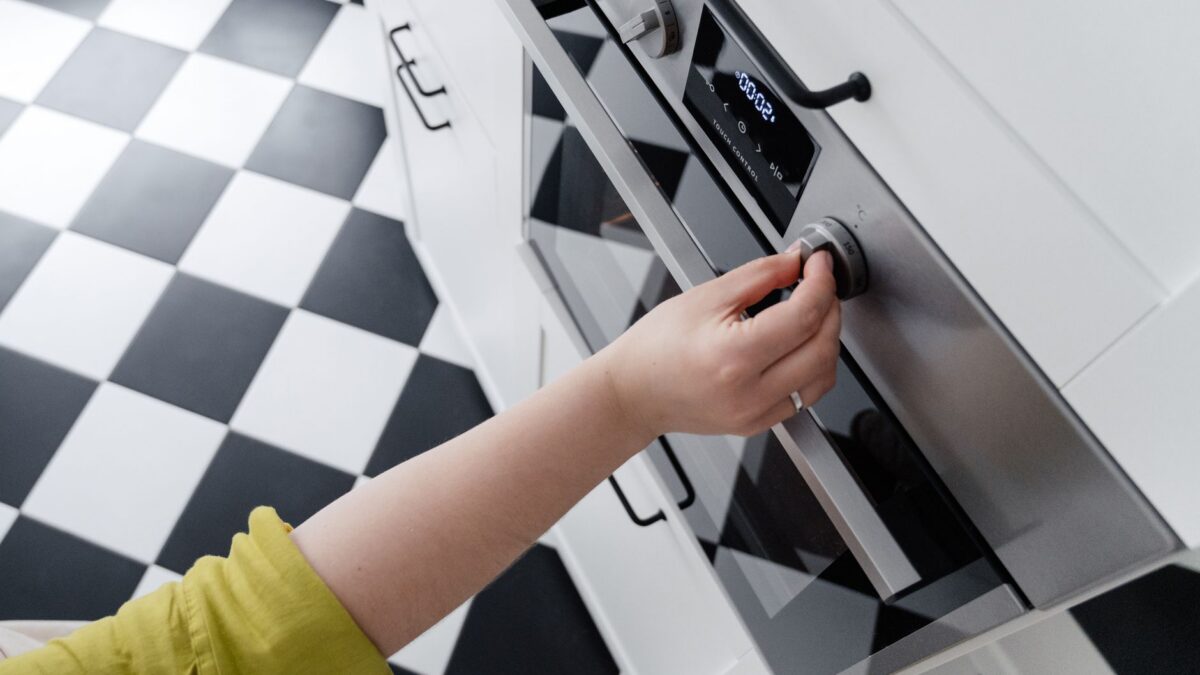
350°F converts to 176.7°C, which recipes round to 180°C for a conventional oven. In a fan forced (convection) oven, set 160°C instead, because the standard rule is to lower the temperature by 20°C when the fan is on. In the UK, 350°F is also gas mark 4.
Why does a fan forced oven need a lower temperature?
A fan forced oven needs a lower temperature because the fan moves hot air over the food, which transfers heat faster than still air at the same setting. Without the 20°C reduction, cakes and muffins tend to brown on top before the middle is cooked, and cookies spread and darken at the edges.
The reduction applies to recipes written for a conventional oven (also called top and bottom heat, or static). Many Australian and British recipes already list a fan forced temperature next to the conventional one. If a recipe says “160°C fan” or “180°C (160°C fan)”, use the fan figure as written and do not reduce it again.
What is the full °F to °C fan forced conversion chart?
The chart below rounds Celsius to the nearest 10°C, the way most recipes print it, and gives the fan forced setting 20°C lower. Exact conversions are in brackets.
- 300°F: 150°C conventional (148.9°C), 130°C fan forced, gas mark 2
- 325°F: 160°C conventional (162.8°C), 140°C fan forced, gas mark 3
- 350°F: 180°C conventional (176.7°C), 160°C fan forced, gas mark 4
- 375°F: 190°C conventional (190.6°C), 170°C fan forced, gas mark 5
- 400°F: 200°C conventional (204.4°C), 180°C fan forced, gas mark 6
- 425°F: 220°C conventional (218.3°C), 200°C fan forced, gas mark 7
- 450°F: 230°C conventional (232.2°C), 210°C fan forced, gas mark 8
Gas marks and lower or higher temperatures are covered in our longer guide to oven temperature conversions, gas marks and fan settings.
How do you convert any Fahrenheit temperature to Celsius?
To convert Fahrenheit to Celsius, subtract 32 and multiply the result by 5/9. For 350°F, that is 350 minus 32, which gives 318, and 318 times 5/9 gives 176.7°C.
For a fan forced oven, convert first and then take off 20°C:
- Subtract 32 from the Fahrenheit temperature.
- Multiply by 5, then divide by 9.
- Round to the nearest 10°C, since oven dials rarely mark smaller steps.
- Subtract 20°C if the fan will be on.
Going the other way, from a fan forced Celsius recipe to a US oven, add 20°C first, then multiply by 9/5 and add 32.
Does baking time change at 160°C fan?
Baking time at 160°C fan stays close to the time for 180°C conventional, but food often finishes a few minutes sooner. Start checking about 5 minutes before the shortest time in the recipe.
Use the usual doneness signs instead of the clock:
- Cakes and muffins: a toothpick in the center comes out clean or with a few dry crumbs, and the top springs back when pressed lightly.
- Cookies: edges are set and lightly golden, while centers may still look soft.
- Quick breads: the top is firm and a skewer in the thickest part comes out clean.
Our page on muffin baking times at 180°C, fan and conventional gives times for mini, standard and jumbo muffins.
When should you not lower the temperature for the fan?
Skip the 20°C reduction when the recipe already states a fan temperature, or when your oven adjusts for the fan by itself. Some ovens have a convection conversion setting that lowers the temperature automatically once you enter the conventional figure, and the manual will say whether yours does.
Some bakes do better with the fan off altogether:
- Custards, cheesecakes and baked puddings, which can crack or form a skin in moving air.
- Soufflés and very light sponges, which can rise unevenly.
- Meringues, which need low, gentle heat to dry out.
For these, use the conventional setting and the conventional temperature.
How do you know your oven really reaches 160°C?
An oven thermometer is the only reliable way to know, because many home ovens run 10°C or more above or below the dial. Place it on the middle rack, heat the oven for at least 15 minutes, and compare the reading with the setting. If your oven runs hot or cool, adjust the dial to match the target. Our guide to oven thermometers and placement explains how to calibrate.
Fan ovens can also have hot spots near the fan. Turning trays halfway through baking helps cookies and cupcakes brown evenly.
Quick answers
Is 180°C the same as 350°F?
Yes, for baking purposes. The exact conversion of 350°F is 176.7°C, and recipes round it to 180°C. In a fan forced oven, use 160°C.
What gas mark is 350°F?
350°F is gas mark 4, which also corresponds to 180°C conventional and 160°C fan forced.
Can I cook chicken at 160°C fan forced?
Yes. Chicken roasted at 160°C fan cooks about as it would at 350°F conventional. Whatever the oven setting, chicken is safe once the thickest part reaches 165°F (74°C), the minimum internal temperature listed by FoodSafety.gov.