Classic Chocolate Chip Cookies: Standard Recipe, Chill Time, and How to Make Them Chewy or Crisp
The classic creamed-butter cookie dough is endlessly adjustable. Chill time, sugar balance and bake time are the three levers that move it from chewy to crisp.
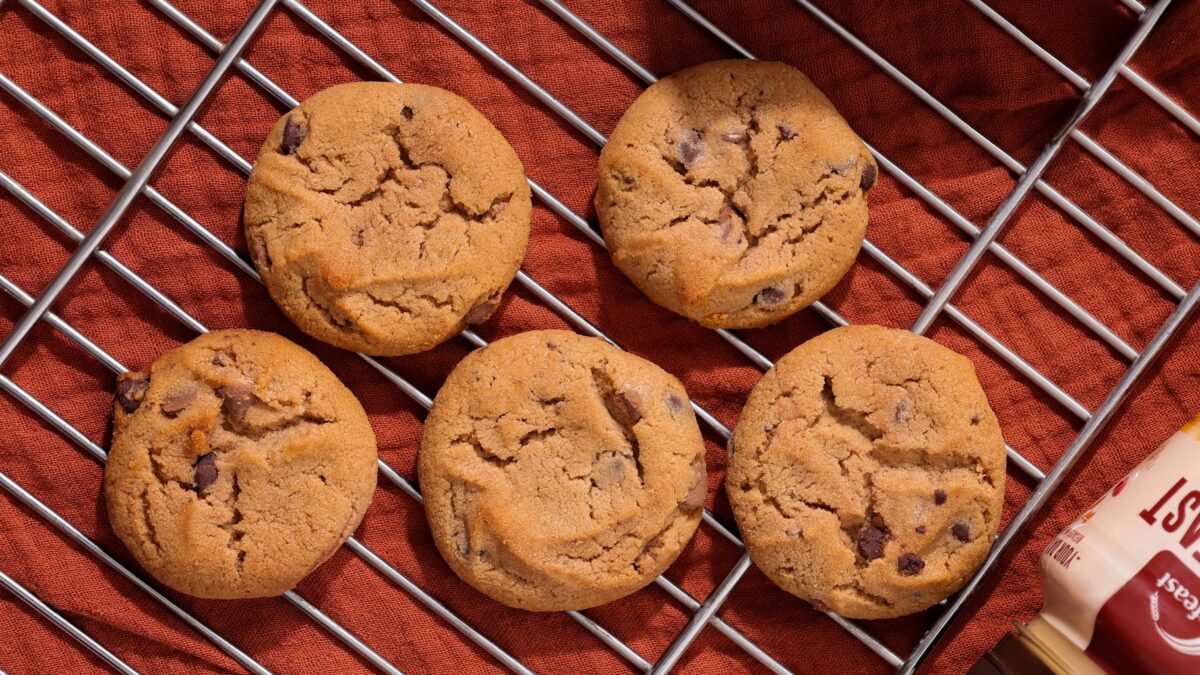
Classic chocolate chip cookies are made by creaming butter with white and brown sugar, beating in eggs and vanilla, then mixing in flour, baking soda, salt and chocolate chips, and baking at 375°F (190°C) for about 9–11 minutes. Chilling the dough for at least 30 minutes, and up to a day or more, limits spread and deepens flavor. For chewier cookies, use more brown sugar and pull them early; for crisper cookies, use more white sugar and bake a little longer.
The recipe below follows the long-standing classic ratio. Weights use King Arthur Baking’s ingredient weight chart: 120 g per cup of flour, 198 g per cup of granulated sugar, 213 g per cup of packed brown sugar and 170 g per cup of chocolate chips.
Ingredients (about 4 dozen 2 1/2-inch cookies)
- 2 1/4 cups (270 g) all-purpose flour
- 1 teaspoon baking soda
- 1 teaspoon table salt
- 1 cup (2 sticks, 227 g) unsalted butter, softened
- 3/4 cup (149 g) granulated sugar
- 3/4 cup (160 g) packed light brown sugar
- 2 large eggs, at room temperature
- 2 teaspoons vanilla extract
- 2 cups (340 g) semisweet chocolate chips or chopped chocolate
- Optional: 1 cup (113 g) chopped walnuts or pecans
Method
- Whisk the flour, baking soda and salt in a bowl.
- Beat the butter and both sugars on medium speed for 2–3 minutes, until lighter in color and fluffy.
- Beat in the eggs one at a time, then the vanilla.
- On low speed, mix in the flour mixture just until no dry streaks remain. Stir in the chocolate and nuts by hand.
- Cover and refrigerate the dough for at least 30 minutes, or up to 72 hours. You can also scoop it into balls first and chill the balls.
- Heat the oven to 375°F (190°C; 170°C fan; gas mark 5). Line baking sheets with parchment.
- Scoop rounded tablespoons (about 25–30 g) of dough, spacing them 2 inches apart.
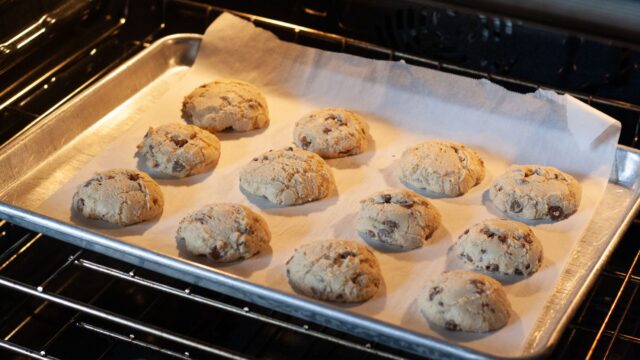
- Bake one sheet at a time on the center rack for 9–11 minutes (a minute or two longer for very cold dough), until the edges are golden and the centers look set at the rim but still slightly soft.
- Cool on the sheet for 2–3 minutes to firm up, then move to a rack. Let the sheet cool before the next batch.
Why chill the dough?
King Arthur Baking explains two effects. First, chilling firms the butter, so it melts more slowly in the oven and the cookie sets before it spreads too far. Second, during resting the flour and sugar absorb liquid from the eggs. Drier dough spreads less, browns more evenly and develops a deeper, toffee-like flavor as sugars and flour hydrate.
| Chill time | What changes |
|---|---|
| None | Thinner, wider cookies; paler, softer texture; simpler flavor |
| 30–60 minutes | Noticeably less spread; good everyday choice |
| 12–24 hours | Thicker cookies, deeper browning, more caramel flavor |
| 48–72 hours | Most pronounced flavor; diminishing returns after this |
Keep chilled dough covered so it does not dry out or pick up fridge odors. For a deeper look at spread, see why cookies spread.
Chewy or crisp: the levers
| Lever | For chewier | For crisper |
|---|---|---|
| Sugar balance | More brown sugar, e.g. 1/2 cup white + 1 cup brown | More white sugar, e.g. 1 cup white + 1/2 cup brown |
| Butter | Melted and cooled butter, mixed by hand | Softened butter, well creamed |
| Eggs | Add an extra yolk | Standard 2 eggs, or 1 egg + 1 tbsp milk |
| Flour | Bread flour for some or all (more chew) | All-purpose; scoop smaller portions |
| Bake | Pull when centers still look underdone | Bake 1–2 minutes longer, or at 350°F for longer |
| Size | Larger, thicker balls | Smaller balls, flattened slightly |
The chemistry: brown sugar contains molasses, which holds moisture and contains invert sugars that interfere with sugar recrystallizing as the cookie cools. That keeps the cookie bendy. White sugar dries and recrystallizes, giving snap. A full explanation is in chewy vs crispy cookies.
Chips, chunks and chopped chocolate
- Chips contain less cocoa butter and hold their shape, giving distinct pockets.
- Chopped bar chocolate melts into streaks and shards and spreads through the dough.
- Mini chips distribute more evenly, which suits small cookies.
- For a mix of flavors, combine semisweet with a portion of dark or milk chocolate; keep the total around 2 cups (340 g).
Storing and freezing
Store cooled cookies in an airtight container at room temperature. To keep soft cookies soft, avoid storing them with crisp ones. Unbaked dough balls freeze well: freeze on a tray, then bag them, and bake straight from frozen, adding a couple of minutes. Baked cookies also freeze well wrapped airtight.
Troubleshooting
| Problem | Cause | Fix |
|---|---|---|
| Flat, greasy cookies | Butter too warm; dough not chilled; warm sheets | Chill dough; cool sheets between batches |
| Thick, cakey, puffy | Too much flour; overcreamed | Weigh flour; cream 2–3 minutes, not 6 |
| Hard after cooling | Overbaked; too much white sugar | Pull earlier; shift toward brown sugar |
| Burnt bottoms | Dark sheets; low rack | Use light sheets with parchment; center rack |
| Uneven batch | Hot spots | Rotate halfway; check oven temperature |
Food safety and allergens
Do not eat raw cookie dough. The CDC warns that raw flour and raw eggs can contain E. coli and Salmonella, and that this applies to children’s tasting, too. Bake the dough fully and wash hands and surfaces afterward. This recipe contains wheat (gluten), eggs and milk, and tree nuts if added; many chocolate chips also contain milk and soy. Use certified ingredients for allergy-friendly versions and follow medical advice for allergies or celiac disease.
Bottom line
Use the classic ratio, chill the dough for at least 30 minutes, bake at 375°F until the edges are golden but the centers still look soft, and adjust brown sugar and bake time to land exactly where you like on the chewy-to-crisp scale.
FAQ
Do I have to chill the dough?
No, but unchilled dough spreads more and tastes simpler. Even 30 minutes helps.
Can I use salted butter?
Yes. Reduce the table salt to 1/2 teaspoon.
Why are my cookies different from batch to batch?
Dough temperature and sheet temperature change as you work. Keep the dough cold between batches and always start on a cool sheet.
How do I get bakery-style thick cookies?
Chill the dough overnight, scoop larger balls of about 50–60 g and bake at 375°F for 11–13 minutes.