Self-Rising Flour Substitute: The DIY Ratio, UK vs US Differences and When to Use It
Self-rising flour is just flour with leavening and, in the US, salt already mixed in. Here is the standard DIY blend, how UK self-raising compares, and how to swap either way.
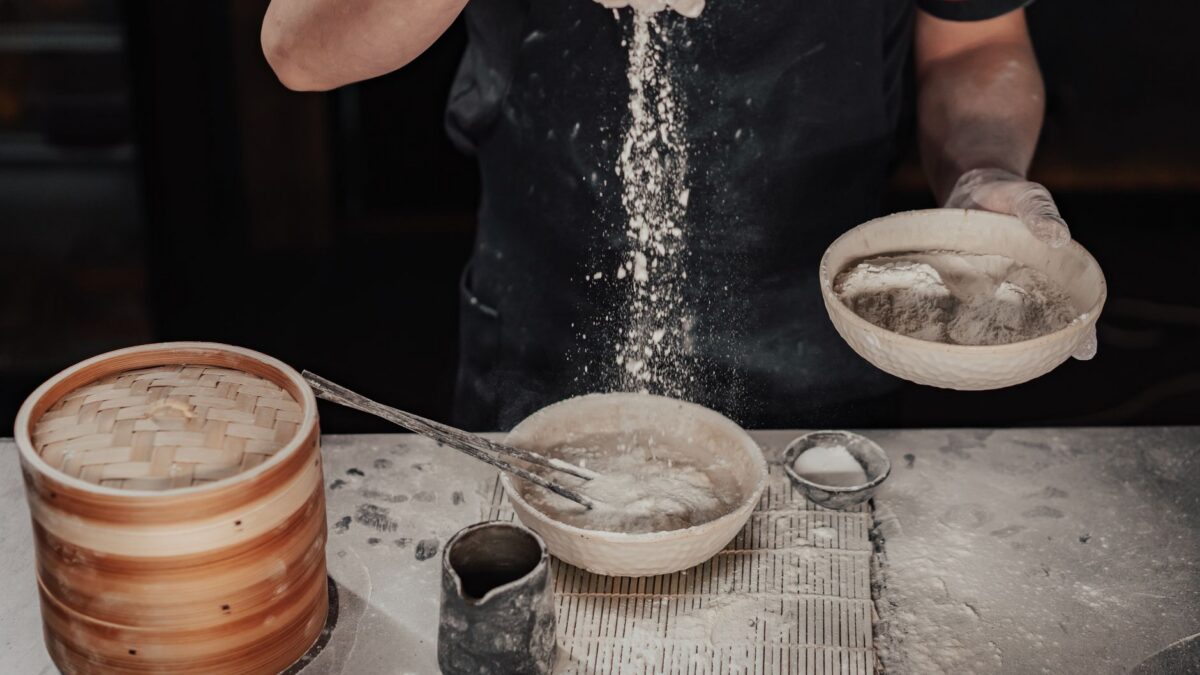
To make a self-rising flour substitute, whisk 1 cup (120 g) all-purpose flour with 1 1/2 teaspoons (6 g) baking powder and 1/4 teaspoon (about 1.5 g) fine salt. That matches the usual US formula. UK self-raising flour normally contains no added salt, so for British recipes leave the salt out and add it only if the recipe lists it separately.
What self-rising flour is
Self-rising flour (called self-raising flour in the UK, Ireland and Australia) is white flour with chemical leavening already blended in. It was designed for quick, simple baking: biscuits, scones, pancakes and plain cakes, where you would otherwise add baking powder anyway.
US self-rising flour usually contains baking powder and salt and is traditionally milled from softer, lower-protein wheat. That is why it is closely tied to Southern-style biscuits, which are tender rather than chewy. UK self-raising flour usually contains baking powder only, with no salt.
DIY self-rising flour ratio
| Flour (all-purpose / plain) | Baking powder | Fine salt (US style) |
|---|---|---|
| 1/2 cup (60 g) | 3/4 tsp (3 g) | 1/8 tsp |
| 1 cup (120 g) | 1 1/2 tsp (6 g) | 1/4 tsp (about 1.5 g) |
| 2 cups (240 g) | 1 tbsp (12 g) | 1/2 tsp (3 g) |
| 3 cups (360 g) | 1 1/2 tbsp (18 g) | 3/4 tsp (4.5 g) |
Flour is measured at 120 g per cup and baking powder at 4 g per teaspoon, following the King Arthur weight chart. If you measure flour by scooping the cup straight into the bag, you can end up with much more than 120 g; see how to measure flour.
How to mix it
- Weigh or spoon-and-level the flour into a bowl.
- Add the baking powder and salt.
- Whisk for 20–30 seconds, or sift together, until the leavening is completely even. Uneven mixing gives lopsided rise and bitter pockets.
- Use it right away, or store it airtight and label it with the date. Baking powder slowly loses strength, so a big batch is best used within the shelf life of your baking powder.
Using salt correctly
Use fine table salt for this ratio. Kosher salt crystals are larger, so a quarter teaspoon contains less salt by weight, and brands differ a lot: King Arthur’s chart lists Diamond Crystal kosher salt at about half the weight of table salt per tablespoon. If you only have kosher salt, weigh it (about 1.5 g per cup of flour) or use roughly double the volume of Diamond Crystal.
UK self-raising vs US self-rising
| US self-rising flour | UK self-raising flour | |
|---|---|---|
| Leavening | Baking powder | Baking powder |
| Salt | Usually added | Usually none |
| Typical wheat | Often soft, low-protein (Southern brands) | Soft wheat, typically lower protein than bread flour |
| Common uses | Biscuits, quick breads, pancakes | Victoria sponge, scones, fairy cakes, rock cakes |
The amount of baking powder varies by brand, so check the ingredient list if a recipe is sensitive to rise. For a homemade UK-style version, Dr. Oetker’s UK guidance is 1 1/2 teaspoons baking powder per 150 g plain flour, with no salt. Readers converting between the two can also use cups to grams.
Converting recipes
Recipe calls for self-rising, you have all-purpose
Use the DIY ratio above for each cup of self-rising flour. If the recipe was written for UK self-raising flour, skip the salt in the blend.
Recipe calls for all-purpose, you have self-rising
For each cup of self-rising flour you use, omit about 1 1/2 teaspoons baking powder and 1/4 teaspoon salt from the recipe. This works well when the recipe already uses about that much baking powder per cup, as many muffins and pancakes do.
Be careful with recipes that use baking soda as the main leavener (buttermilk muffins, banana bread, soda bread). Self-rising flour adds baking powder on top, which can over-leaven the batter so it domes quickly and then sinks. Keep the recipe’s soda, but expect a lighter, more open crumb, and if the recipe has little or no baking powder to remove, use all-purpose flour instead.
Recipes where self-rising flour is a poor fit
- Yeast breads and pizza: the extra leavening and softer flour give a cakey, weak dough.
- Cookies designed for spread: the added powder makes them puffier.
- Pastry and pie crust: the leavening makes crust puffy rather than flaky.
- High-altitude baking: recipes often need less leavening, which you cannot remove from pre-mixed flour. See high-altitude baking.
Does self-rising flour expire?
The flour itself keeps like any white flour, but its built-in baking powder slowly loses power, especially in a warm, humid kitchen. If muffins or biscuits made with an older bag rise poorly, the leavening is a likely cause. Store the bag airtight in a cool, dry place and use it by the date on the package.
Remember that flour, self-rising or not, is a raw agricultural product. Do not eat raw dough or batter made with it; cook it fully first.
Bottom line
One cup of all-purpose flour plus 1 1/2 teaspoons baking powder and 1/4 teaspoon fine salt equals one cup of US self-rising flour. Leave out the salt for UK self-raising recipes. When you swap self-rising flour into a regular recipe, remove matching baking powder and salt, and avoid it in yeast breads, pastry and soda-heavy recipes.
FAQ
Can I use cake flour to make self-rising flour?
Yes. Cake flour is lower in protein, so the result is softer and closer to Southern-style self-rising flour. Use the same 1 1/2 teaspoons baking powder and 1/4 teaspoon salt per cup.
Is self-rising flour the same as all-purpose flour with baking soda?
No. Self-rising flour contains baking powder, which includes its own acid. Baking soda alone needs an acidic ingredient and is about three times stronger, so it cannot be swapped in at the same amount.
Can I make gluten-free self-rising flour?
Yes. Mix a 1:1 gluten-free flour blend with the same amount of baking powder and salt, and make sure the baking powder is labeled gluten-free.
Why are my scones flat with self-rising flour?
The built-in baking powder may be stale, the dough may be too wet, or it may have been handled too much. Check the date on the bag and keep the butter cold.