Cake Pans Guide: Round, Square, Sheet, Bundt and Springform for a Starter Kit
The handful of cake pans that cover most recipes, how their sizes compare, and what material and color do to your bake.
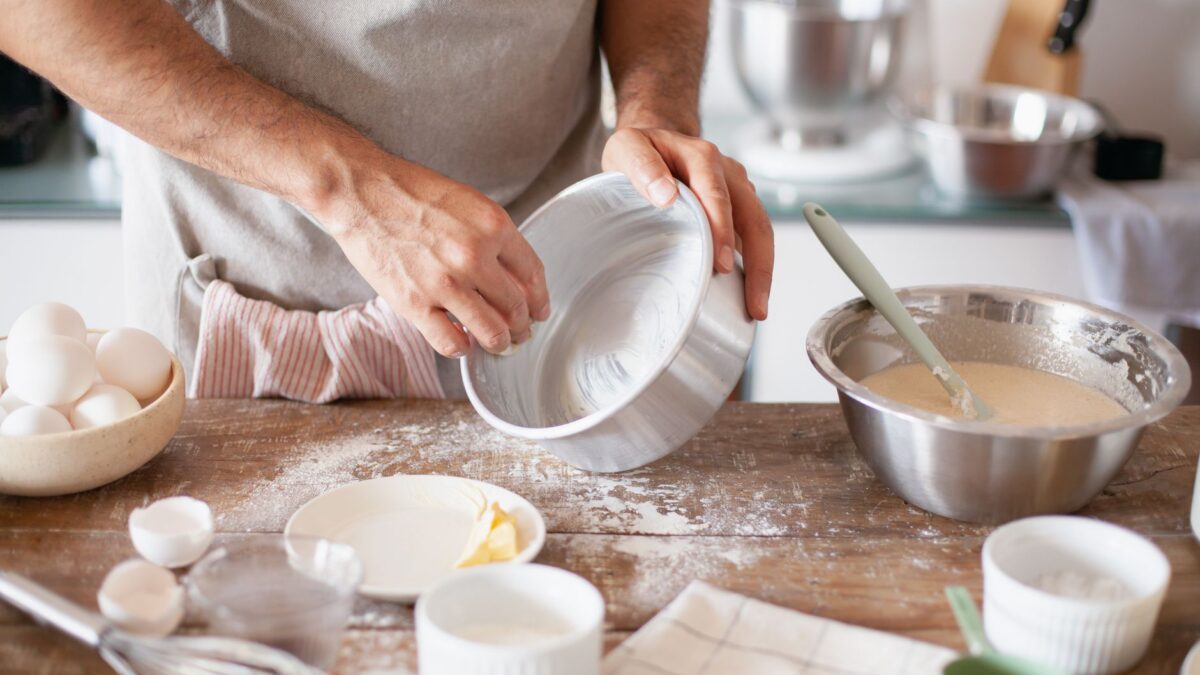
A practical starter set is two 9-inch round pans (or 8-inch, if your recipes use them), one 9×13-inch rectangular pan, one 8- or 9-inch square pan and one loaf pan. Add a Bundt or springform pan once you know you will bake those styles. Choose light-colored, heavy-gauge aluminum or aluminized steel with straight sides about 2 inches (5 cm) deep.
The right pan matters because size and depth control how quickly the center bakes. Use a pan that is too small and the cake may dome, crack or sink in the middle; too large and it bakes thin and dry.
The core shapes and what they are for
| Pan | Common sizes | Used for |
|---|---|---|
| Round | 8 x 2 in, 9 x 2 in | Layer cakes, single-layer snack cakes, cornbread |
| Square | 8 x 8 in, 9 x 9 in | Brownies, bars, snack cakes, gingerbread |
| Rectangle (“sheet cake” at home) | 9 x 13 in | Sheet cakes, bars, coffee cake, large-batch brownies |
| Loaf | 9 x 5 in, 8 1/2 x 4 1/2 in | Banana bread, pound cake, lemon loaf |
| Bundt or tube | Often 10 to 12 cups | Pound cakes, dense batters that need a center tube to bake evenly |
| Springform | 9 in is common | Cheesecake, tortes, delicate cakes that cannot be inverted |
Recipes for a “9×13” mean a pan of about that size measured across the top inside edges. Measure yours with a ruler; slanted sides and rolled rims can make a pan smaller than its label.
How the sizes compare
When a recipe calls for a pan you do not have, compare surface area at similar depth. These are approximate areas:
| Pan | Approximate area | Roughly equal to |
|---|---|---|
| 8-in round | 50 sq in (323 sq cm) | Slightly smaller than an 8-in square |
| 9-in round | 64 sq in (413 sq cm) | 8-in square |
| 8-in square | 64 sq in (413 sq cm) | 9-in round |
| 9-in square | 81 sq in (523 sq cm) | About 1 1/2 times an 8-in round; slightly more than a 10-in round |
| 9 x 13 in | 117 sq in (755 sq cm) | About two 9-in rounds |
So a two-layer 9-inch round recipe usually fits a 9×13, and an 8-inch square holds the same batter as a 9-inch round. Bake times change with depth, so check early. Full conversion tables are in cake pan size conversions.
Materials and color
- Aluminum (uncoated or anodized): heats evenly and quickly, gives a light golden crust. A common choice for layer cakes.
- Aluminized steel: a steel body coated with aluminum alloy; sturdy and resistant to warping, often with a nonstick finish.
- Dark nonstick: browns faster and can over-brown edges or cause doming. Check early; many bakers lower the oven slightly with dark pans.
- Glass and ceramic: heat more slowly but hold heat longer, so edges can overbake by the time the center is done. Many bakers lower the oven by about 25°F (about 15°C) for glass. Check the manufacturer’s guidance for temperature limits and avoid sudden temperature changes.
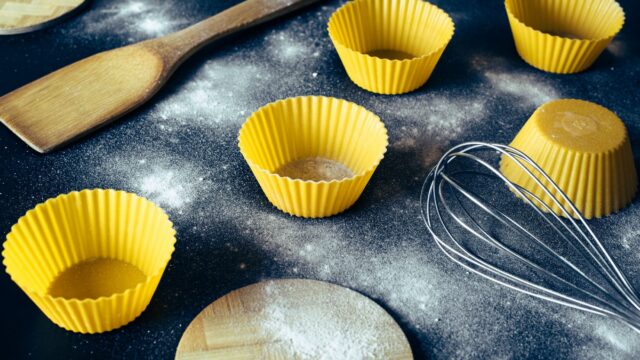
- Silicone: flexible and easy to release but bakes paler and needs a baking sheet underneath for support.
Features worth checking
Straight sides and depth
Straight sides give neat layers that stack well. A 2-inch depth handles most layer and snack cake recipes without overflow.
Removable bottoms
Springform pans have a latch and a separate base. They are essential for cheesecake but can leak thin batters, so wrap the outside with foil if using a water bath.
Bundt detail
Intricate Bundt designs look beautiful but need careful greasing into every groove. Brush on soft butter or shortening, then dust with flour, or use a baking spray that contains flour.
Handles and rims
A flat rim on a 9×13 makes it easier to lift and to cover with foil or a lid for transport.
Preparing pans so cakes release
- Grease the bottom and sides with soft butter, shortening or a baking spray.
- Line the bottom of round pans with a parchment circle for guaranteed release.
- Dust greased surfaces with flour, or with cocoa for chocolate cakes, and tap out the excess.
- Fill pans about half to two-thirds full.
- Cool cakes in the pan on a rack for about 10 to 15 minutes before turning out, unless the recipe says otherwise. Cheesecakes cool in the springform.
Care
- Hand wash aluminum and nonstick pans; dishwasher detergents can dull or discolor aluminum.
- Avoid metal utensils and abrasive pads on coated pans.
- Dry fully, especially steel pans with rolled edges, to avoid rust.
- Store nested pans with a paper towel between them to protect finishes.
A simple buying order
- 9×13 rectangular pan: the most versatile single pan.
- Two 8- or 9-inch rounds: for layer cakes.
- Loaf pan: for quick breads such as banana bread.
- 8- or 9-inch square: for brownies and bars.
- Bundt or springform: when you start baking pound cakes or cheesecakes.
Bottom line
Start with a 9×13, two rounds, a square and a loaf pan in light, heavy-gauge metal with straight sides. Match the pan size in the recipe whenever possible, compare by area when you cannot, and adjust time and temperature for dark metal or glass.
FAQ
8-inch or 9-inch round pans?
Both are common. Nine-inch pans are a bit more versatile; if your favorite recipes call for 8-inch, buy those, or expect thinner layers that bake faster in 9-inch pans.
Can I bake a cake in a glass dish?
Yes, but glass heats slowly and holds heat. Many bakers lower the oven by about 25°F and check the center carefully.
Why does my cake dome in the center?
Edges set before the center finishes rising, often from a hot oven or a dark pan. See why cakes dome and crack.
What is a true sheet pan cake?
At home, “sheet cake” usually means a 9×13. Thin cakes baked on a rimmed half sheet pan are also common.