Cut-Out Christmas Sugar Cookies That Hold Their Shape: Chilling, Rolling and Baking
Sugar cookies keep sharp edges when the dough has enough flour, little or no leavening and is rolled and cut while cold. Here is the method step by step.
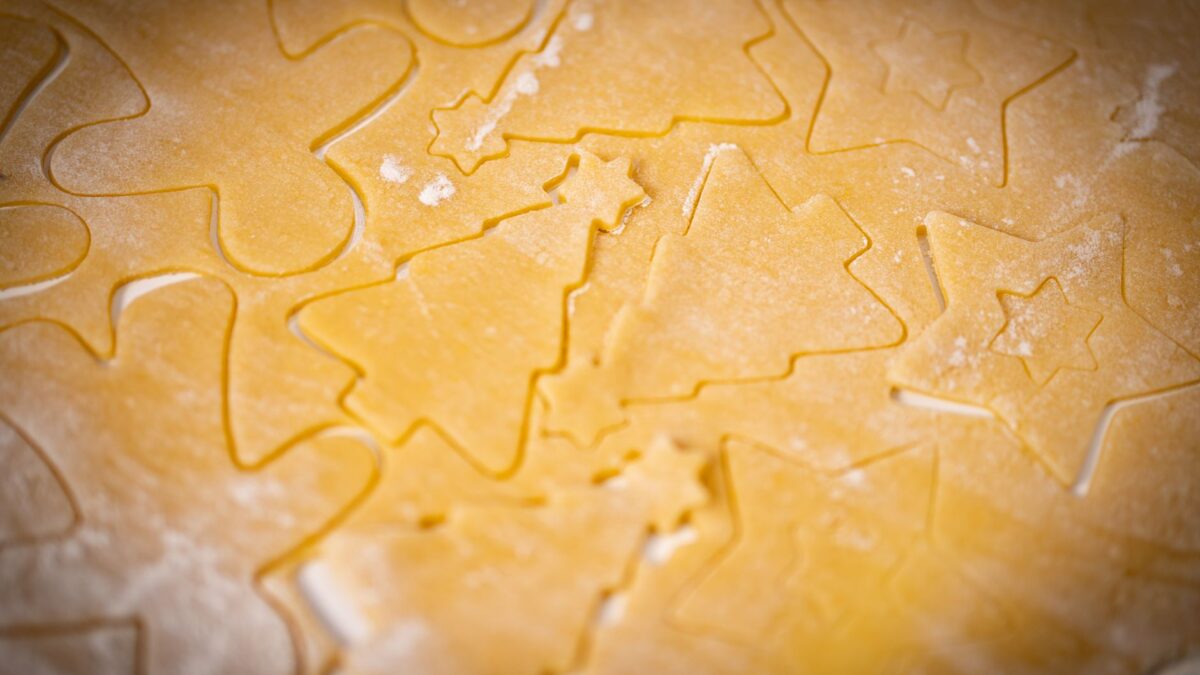
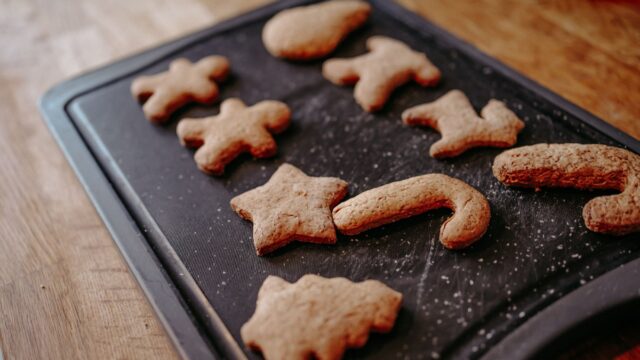
Cut-out sugar cookies hold their shape when the dough is firm, cold and low in leavening. Use a standard ratio of about 1 cup butter to 3 cups flour, cream the butter and sugar only until combined rather than fluffy, roll the dough to about 1/4 inch (6 mm) between sheets of parchment, chill it, cut it while cold and bake at 350°F (175°C) just until the edges are set and barely golden, usually 8 to 11 minutes.
Flour weights use King Arthur’s convention of 120 g per cup, spooned and leveled. The dough below makes about 24 to 36 cookies, depending on cutter size.
Ingredients
- 1 cup (227 g, 2 sticks) unsalted butter, softened but still cool
- 1 cup (198 g) granulated sugar
- 1 large egg, at room temperature
- 1 1/2 teaspoons vanilla extract (or 1 teaspoon vanilla plus 1/4 teaspoon almond extract)
- 3 cups (360 g) all-purpose flour, plus a little for dusting
- 1/2 teaspoon baking powder (optional; omit for the sharpest edges)
- 1/2 teaspoon fine salt
Method
- Whisk the flour, baking powder (if using) and salt in a bowl.
- Beat the butter and sugar on medium-low speed for 1 to 2 minutes, just until smooth and combined. Avoid long creaming: air beaten in now expands in the oven and blurs the edges.
- Beat in the egg and vanilla.
- Add the flour mixture on low speed until a soft dough forms and no dry patches remain.
- Divide the dough in half. Roll each half between two sheets of parchment to an even 1/4 inch (6 mm).
- Slide the sheets onto a tray and refrigerate at least 1 hour, or freeze for 20 to 30 minutes, until firm.
- Heat the oven to 350°F (175°C), gas mark 4, or about 160°C fan. Line baking sheets with parchment.
- Peel off the top parchment, cut shapes and transfer them to the lined sheets about 1 inch (2.5 cm) apart. If the dough softens, chill the cut shapes on the sheet for 10 minutes before baking.
- Bake one sheet at a time on the middle rack for 8 to 11 minutes, until the edges are set and just starting to turn golden. Small shapes need less time, large ones more.
- Cool 5 minutes on the sheet, then move to a rack. Cool completely before decorating.
Re-roll scraps once or twice between parchment and chill again; each re-roll adds a little flour and toughness, so gather scraps gently.
Why rolling before chilling works
Many recipes tell you to chill a ball of dough, then roll it. That works, but cold dough is hard to roll and tends to crack. Rolling the soft dough between parchment first and then chilling the flat sheets has three advantages: no extra flour gets worked in, the sheets chill faster because they are thin, and the dough is ready to cut the moment it comes out of the fridge.
Thickness and bake time
| Thickness | Texture | Approximate bake at 350°F (175°C) | Best for |
|---|---|---|---|
| 1/8 inch (3 mm) | Thin and crisp | 6–8 min | Small shapes, shipping, sandwiching |
| 1/4 inch (6 mm) | Crisp edges, soft center | 8–11 min | Most decorated cookies |
| 3/8 inch (1 cm) | Soft and thick | 10–13 min | Large shapes, soft-style frosted cookies |
Rolling guides (rings that slip onto a rolling pin) or two wooden strips of the right thickness on either side of the dough make even thickness easy. Uneven dough bakes unevenly: thin spots brown while thick spots stay pale.
Why sugar cookies spread, and how to stop it
| Cause | Fix |
|---|---|
| Butter too warm or melted | Use butter that is soft but cool, around 65°F (18°C) |
| Too much air from long creaming | Beat butter and sugar only until combined |
| Too much leavening | Use 1/2 teaspoon baking powder or none |
| Flour scooped short or dough too soft | Weigh flour; add 1–2 tablespoons if dough is sticky |
| Warm dough or warm baking sheet | Chill cut shapes; use cool sheets between batches |
| Greased sheet | Line with parchment instead of greasing |
The same principles apply to all cookies; see why cookies spread for the full explanation.
Decorating
- Sanding sugar or sprinkles go on before baking; press lightly so they stick.
- Simple glaze: whisk 2 cups (227 g) powdered sugar with 2 to 3 tablespoons milk and 1/2 teaspoon vanilla. It dries to a soft sheen in a few hours.
- Royal icing dries hard and stackable. If you make it with raw egg whites, use pasteurized egg whites or meringue powder, since the icing is not cooked.
- Buttercream stays soft and is best for cookies served within a day or two; see simple buttercream.
Always decorate fully cooled cookies; any warmth melts icing and makes colors run.
Make ahead
- Dough: keep rolled sheets wrapped in the fridge for 2 to 3 days, or freeze them flat. Cut straight from frozen after a few minutes on the counter.
- Baked, undecorated cookies freeze well in an airtight container. Thaw in the closed container so condensation doesn’t form on the cookies, then decorate. Full details: how to freeze Christmas cookies.
- Decorated cookies with fully dried royal icing keep in an airtight container at room temperature for about a week.
Food safety and allergens
Do not eat raw cookie dough: raw flour and raw eggs can both carry harmful bacteria. This recipe contains wheat (gluten), eggs and milk, and almond extract is made from tree nuts or apricot kernels depending on the brand. Gluten-free and dairy-free swaps need certified ingredients and care with cross-contact. Anyone managing allergies or celiac disease should follow their doctor’s or dietitian’s advice.
Bottom line
For crisp, sharp cut-outs, keep the dough firm and cold: modest creaming, little or no baking powder, roll between parchment to 1/4 inch, chill, cut and bake at 350°F until the edges are just set. Cool completely before decorating.
FAQ
How long should sugar cookie dough chill?
Rolled sheets need at least 1 hour in the fridge or 20 to 30 minutes in the freezer. They can wait in the fridge for up to 2 to 3 days.
Should sugar cookies brown?
Only slightly at the edges. Pale tops with just-golden edges give the classic look; deeper browning means a crisper, nuttier cookie.
Can I skip the baking powder?
Yes. Without it, cookies are a little denser but hold sharp edges best, which suits detailed cutters.
Why are my cookies puffy and soft?
Rolled too thick, too much leavening or underbaked. Roll to an even 1/4 inch and bake until the edges are set.