Butter Conversions: Sticks, Tablespoons, Cups and Grams (Plus UK and Australian Blocks)
American recipes count butter in sticks; most of the world weighs it. Here is how the two systems line up, and how to handle salted versus unsalted.
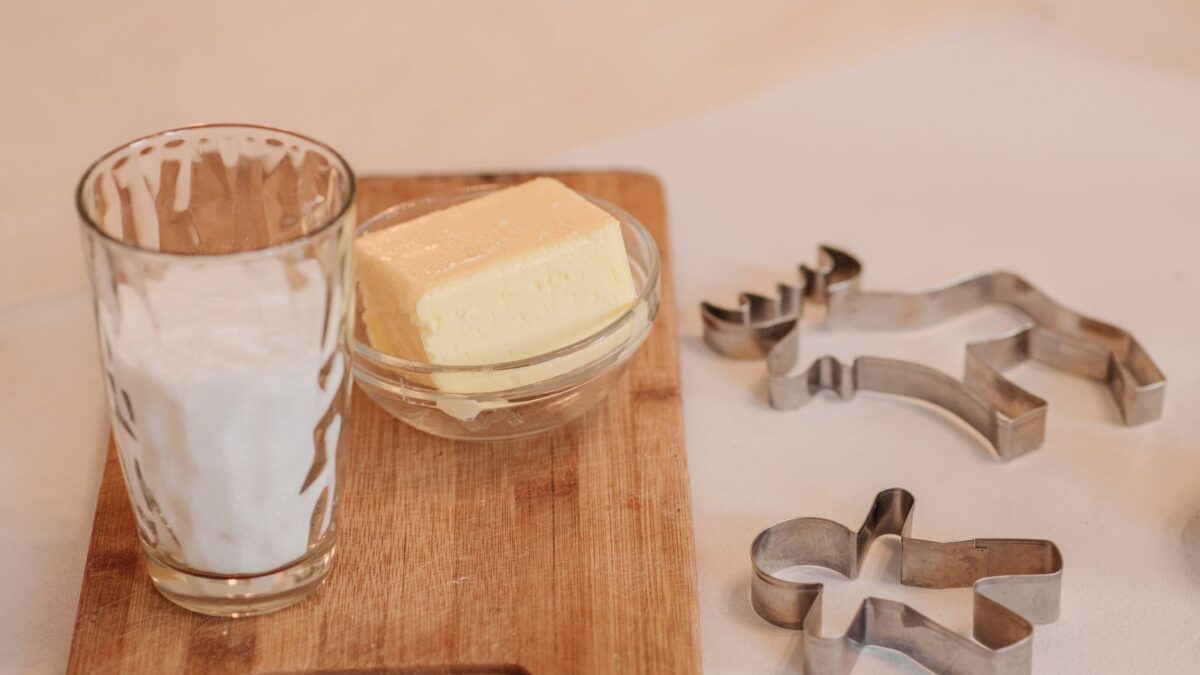
A standard US stick of butter is 1/2 cup, 8 tablespoons, 4 ounces or 113 grams. Four sticks make a pound (454 g), and one tablespoon of butter weighs about 14 g. Butter in the UK, Ireland, Australia and New Zealand is usually sold in 250 g blocks, which equal about 2 1/4 US sticks, or 1 cup plus about 1 1/2 tablespoons.
Butter is one of the easiest ingredients to convert because the wrapper on American sticks is usually printed with tablespoon marks. Where it gets tricky is blocks, tubs and salted versus unsalted.
US butter conversion chart
| Sticks | Tablespoons | Cups | Grams | Ounces |
|---|---|---|---|---|
| 1/8 stick | 1 tbsp | 1/16 cup | 14 g | 1/2 oz |
| 1/4 stick | 2 tbsp | 1/8 cup | 28 g | 1 oz |
| 1/2 stick | 4 tbsp | 1/4 cup | 57 g | 2 oz |
| 2/3 stick | 5 1/3 tbsp | 1/3 cup | 76 g | 2 2/3 oz |
| 1 stick | 8 tbsp | 1/2 cup | 113 g | 4 oz |
| 1 1/3 sticks | 10 2/3 tbsp | 2/3 cup | 151 g | 5 1/3 oz |
| 1 1/2 sticks | 12 tbsp | 3/4 cup | 170 g | 6 oz |
| 2 sticks | 16 tbsp | 1 cup | 227 g | 8 oz |
| 4 sticks | 32 tbsp | 2 cups | 454 g | 16 oz (1 lb) |
The 113 g stick matches the King Arthur Baking ingredient weight chart. Gram values for fractions are rounded. For other ingredients, see the full cups to grams chart.
Sticks in the eastern and western US are often shaped differently (long and thin versus short and wide), but both hold the same 4 ounces. Only the tablespoon marks on the paper sit at different spacing.
Converting 250 g blocks and metric recipes
| Grams | US equivalent (approx.) |
|---|---|
| 25 g | scant 2 tbsp |
| 50 g | 3 1/2 tbsp |
| 100 g | 7 tbsp (just under 1 stick) |
| 125 g (half a block) | 1 stick plus 1 scant tbsp |
| 200 g | 1 3/4 sticks |
| 250 g (one block) | 2 sticks plus about 1 1/2 tbsp |
A practical trick with blocks: most foil wrappers have 25 g or 50 g marks along the side. If yours does not, cut the block in half (125 g each), then halve again (about 62 g). A scale is still the easiest route, and it makes softened or melted butter just as simple to measure as cold.
Canadian butter is commonly sold in 1 lb (454 g) blocks without stick markings, so weighing or cutting by length is the simplest approach there too.
Melted, softened and whipped butter
- Melted butter weighs the same as solid butter. “1/2 cup butter, melted” means measure one stick, then melt it. “1/2 cup melted butter” is effectively the same amount for home baking.
- Softened butter is hard to pack into a cup without air pockets. Use the stick marks or a scale.
- Whipped butter in tubs has air beaten in, so a cup of it contains noticeably less butter. Do not substitute it by volume in baking; weigh it, or use regular butter.
- Spreads and margarine often contain more water than butter. They behave differently in baking; see butter substitutes for baking.
Salted vs unsalted butter
Most baking recipes call for unsalted butter so the baker controls the total salt. Salted butter varies by brand, so the swap is approximate. A commonly used rule is that salted butter contains roughly 1/4 teaspoon of salt per stick, though some brands contain more.
- Recipe says unsalted, you have salted: reduce the recipe’s added salt by about 1/4 teaspoon per stick. If the recipe uses only a pinch of salt, simply leave it out.
- Recipe says salted, you have unsalted: add about 1/4 teaspoon of fine salt per stick.
- To be more precise, check the sodium figure on the label. A teaspoon of table salt weighs about 6 g and is roughly 40% sodium, so 1/4 teaspoon adds roughly 550–600 mg of sodium. Multiply the label’s sodium per tablespoon by 8 to get the sodium per stick and compare.
For frosting, shortbread and other butter-forward bakes, the difference is easier to taste. Salted butter is usually fine in muffins and quick breads, which contain plenty of other flavor.
Butterfat: why some butters bake differently
US federal standards require butter to contain at least 80% milkfat; the rest is mostly water plus milk solids. “European-style” and many imported butters are often higher in fat, commonly around 82% or more. Slightly less water means slightly richer, flakier results in pastry, but the difference is minor in muffins and quick breads. Swap one-for-one by weight.
Whether you use butter or oil changes texture more than butter brand does. Our oil vs butter in muffins guide explains when each one works best.
Bottom line
Think in sticks or grams, not cups, whenever you can: 1 stick = 8 tablespoons = 113 g, and a 250 g block is a little more than 2 sticks. Use unsalted butter when a recipe asks for it, or trim about 1/4 teaspoon of salt per stick if you only have salted.
FAQ
How many grams is a stick of butter?
113 grams, which is 4 ounces, 8 tablespoons or 1/2 cup.
How many sticks of butter is 1 cup?
Two sticks, or 227 g.
How many sticks is 250 g of butter?
About 2 1/4 sticks, or 2 sticks plus roughly 1 1/2 tablespoons.
Can I use salted butter in muffins?
Yes. Reduce the recipe’s added salt by about 1/4 teaspoon per stick of salted butter, or leave out a small pinch entirely.