Baking Soda Substitute: When Baking Powder Works, and When Nothing Does
Baking powder can stand in for baking soda, but you need about three times as much, and the extra acid and salt show. Here is how to decide whether to swap, adjust or wait.
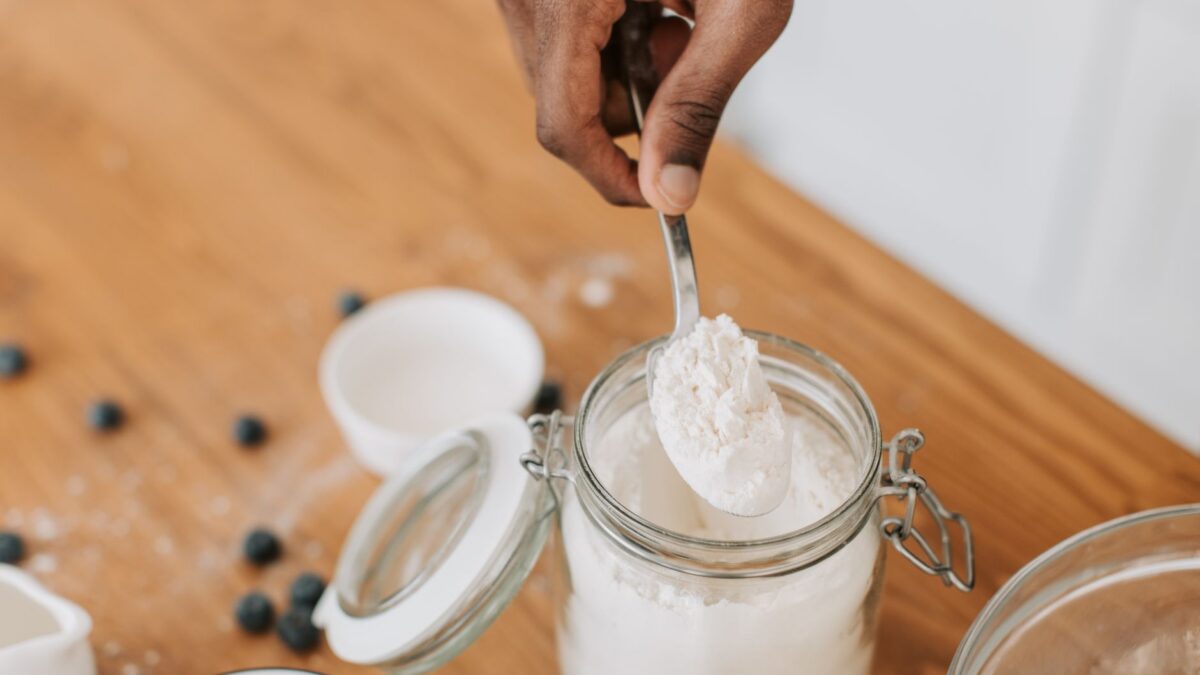
The usual baking soda substitute is baking powder at about three times the amount: 1 teaspoon of baking soda becomes roughly 3 teaspoons (12 g) of baking powder. It works best in muffins, pancakes and quick breads. Finely ground potassium bicarbonate can replace baking soda about 1:1. In recipes that depend on soda for spread, browning or neutralizing a lot of acid, such as some cookies and chocolate cakes, no swap gives quite the same result.
Why baking soda is hard to replace
Baking soda is pure sodium bicarbonate. On its own it is an alkali; when it meets an acid in the batter (buttermilk, yogurt, brown sugar, molasses, honey, natural cocoa, lemon juice), it releases carbon dioxide almost at once. It does three things at the same time:
- Lift: the gas expands in the oven and raises the batter.
- Neutralizing acid: it balances tangy ingredients so the bake does not taste sour.
- Browning and spread: a slightly alkaline batter browns faster and, in cookies, spreads more.
Baking powder already contains its own acid, plus starch filler, so by weight it holds far less soda. That is why you need much more of it, and why it cannot neutralize the recipe’s acid the same way. The background is in baking powder vs baking soda.
Baking soda substitutes at a glance
| Substitute for 1 tsp (about 6 g) baking soda | Amount | Best for | Trade-offs |
|---|---|---|---|
| Double-acting baking powder | About 3 tsp (12 g) | Muffins, pancakes, quick breads, snack cakes | Paler color, slightly salty or bitter edge, less tangy-acid balance |
| Potassium bicarbonate (fine) | About 1:1 (some sources suggest a little more) | Most recipes; lower-sodium baking | Can taste slightly bitter; harder to find |
| Self-rising flour | Replace the flour, omit salt | Simple muffins and quick breads | Gives baking powder lift, not soda lift |
| Whipped egg whites | Fold in 1–2 beaten whites | Pancakes, waffles | Adds air, not chemical leavening; not for muffins |
Weights follow the King Arthur weight chart (baking soda 3 g per 1/2 teaspoon; baking powder 4 g per teaspoon).
How to use baking powder instead of baking soda
- Multiply by three. For each teaspoon of soda, use about 3 teaspoons of baking powder. For 1/2 teaspoon soda, use 1 1/2 teaspoons powder.
- Keep the recipe’s existing baking powder. If the recipe already calls for both, add the converted amount on top of what is already there.
- Cut the salt. Baking powder contains sodium salts, and large amounts can taste salty. Many bakers reduce the recipe’s added salt by about half.
- Expect a paler bake. A less alkaline batter browns more slowly. Bake to doneness cues, not just color: a toothpick should come out clean or with a few moist crumbs.
- Taste the result before scaling up. Bake one tray or a half batch the first time if you can.
Why three times can be too much
Some recipes call for a lot of soda, for example 1 1/2 teaspoons in a chocolate cake. Tripling that gives 4 1/2 teaspoons of baking powder, enough to taste chemical and to over-inflate the batter so it rises fast and then sinks. If the converted amount comes to more than about 2 teaspoons of baking powder per cup of flour, consider making a different recipe or waiting until you have soda. Sunken centers are covered in why muffins sink in the middle.
Potassium bicarbonate
Potassium bicarbonate is the potassium version of baking soda and reacts with acids in the same way. It is sold for baking and for home winemaking. Most guides use it about 1:1 for baking soda, though one supplier suggests slightly more because of its different molecular weight. It does not add sodium, which is why some people on low-sodium diets use it, but it can have a faintly bitter taste. Use a finely milled baking grade; coarse crystals can dissolve unevenly. Anyone on a potassium-restricted diet, for example for kidney disease, should check with their doctor first.
Recipes where no substitute really works
- Soda-heavy cookies. Crisp, spread-out cookies rely on soda’s alkalinity. Baking powder gives puffier, cakier, paler cookies. See why cookies spread for how leavening changes shape.
- Natural-cocoa chocolate cakes. Soda reacts with the acidic cocoa and deepens the color. With baking powder, the cake is lighter brown and can taste sharper.
- Irish soda bread. The soda and buttermilk reaction is the whole leavening system. Baking powder bread is edible but not the same loaf.
- Gingerbread and molasses bakes. Soda balances the acid in molasses. Without it, the flavor turns tangier and the crumb denser.
What not to use
- Washing soda (sodium carbonate) is a cleaning product and is not a food ingredient.
- Baker’s ammonia (ammonium carbonate) is a traditional leavener for thin, dry cookies, but it releases ammonia gas and does not suit muffins or cakes.
- Yeast needs proofing time and changes the flavor and texture completely.
Is your baking soda still active?
Put 1/4 teaspoon of baking soda in a small bowl and add a few drops of vinegar or lemon juice. Fresh soda fizzes strongly at once. Weak fizzing means it has lost strength. An open box that has been used to absorb odors in the fridge is better kept for cleaning.
Bottom line
When you are out of baking soda, use about three times as much baking powder and cut the salt, as long as that does not push you past about 2 teaspoons of powder per cup of flour. Potassium bicarbonate is the closest like-for-like swap. For crisp cookies, natural-cocoa cakes and soda bread, it is usually better to wait until you have baking soda.
FAQ
Can I use baking powder instead of baking soda in banana bread?
Yes. Banana bread and muffins are forgiving. Use about 3 teaspoons of baking powder per teaspoon of soda, reduce the salt slightly and expect a lighter color and a slightly less tender crumb.
Can I just leave the baking soda out?
In a recipe that also has baking powder, the bake may still rise, but more weakly, and acidic ingredients will taste sharper. In a recipe with soda as the only leavener, leaving it out gives a dense, flat result.
Is baking soda the same as bicarbonate of soda?
Yes. In the UK, Ireland and Australia it is usually labeled bicarbonate of soda or bicarb soda. It is the same ingredient as US baking soda.
Does baking soda expire?
It does not spoil, but it can lose strength once opened, especially in humid conditions. Do the vinegar fizz test if a box has been open for a long time.