Overnight Cinnamon Rolls for Christmas Morning: Make-Ahead Steps
Shape cinnamon rolls the night before, chill them 8 to 16 hours, then bake at 350°F for 25 to 30 minutes. Recipe, timing and fixes.
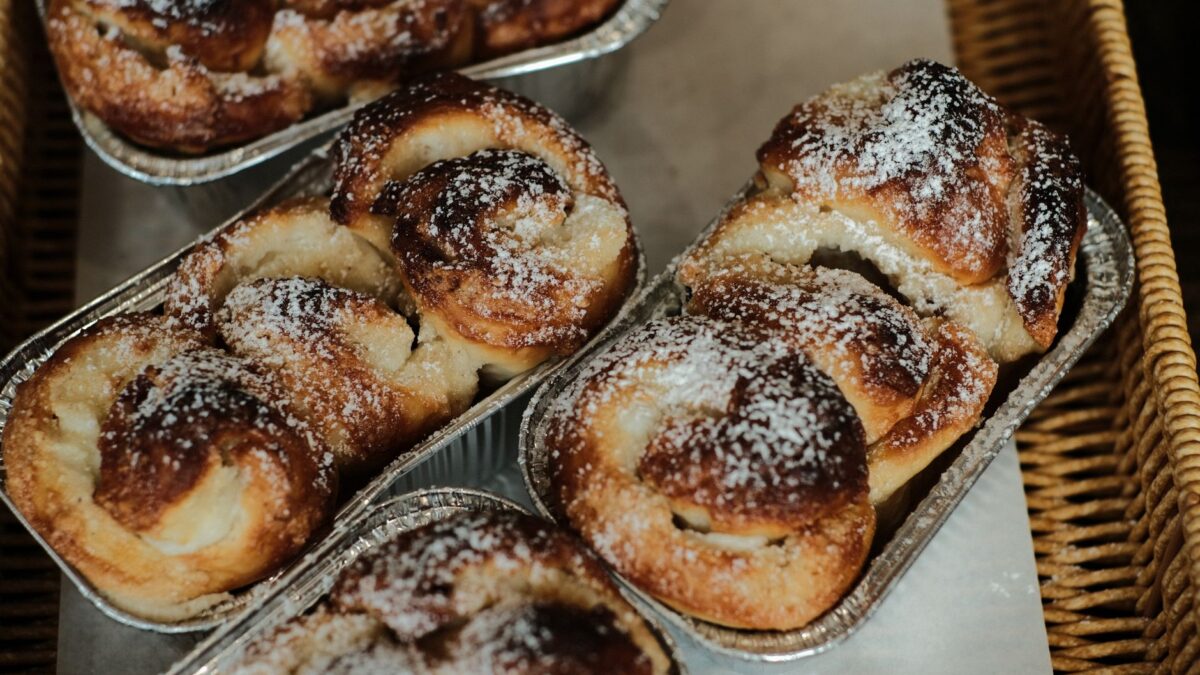
Overnight cinnamon rolls are mixed, risen, filled and cut on Christmas Eve, then held in the refrigerator for 8 to 16 hours. On Christmas morning the pan sits at room temperature for 45 to 60 minutes and bakes at 350°F (175°C) for 25 to 30 minutes. The cold rest replaces the second rise, so the only morning work is heating the oven and stirring the icing.
Ingredients (12 large rolls, one 9×13-inch pan)
Prep: 40 min · Bake: 28 min · Total: 720 min
The total is about 12 hours, and most of it is the overnight rest in the refrigerator.
For the dough:
- 1 cup (240 ml) whole milk, warmed to 100 to 110°F (38 to 43°C)
- 2 1/4 teaspoons (7 g, one packet) instant or active dry yeast
- 1/4 cup (50 g) granulated sugar
- 2 large eggs, at room temperature
- 1/3 cup (75 g) unsalted butter, melted and cooled slightly
- 4 cups (500 g) all-purpose flour, plus more for the counter
- 1 teaspoon (6 g) fine salt
For the filling:
- 1/3 cup (75 g) unsalted butter, very soft
- 3/4 cup (150 g) packed brown sugar
- 2 tablespoons (16 g) ground cinnamon
For the cream cheese icing:
- 4 ounces (113 g) cream cheese, softened
- 1/4 cup (57 g) unsalted butter, softened
- 1 1/2 cups (180 g) powdered sugar
- 1 teaspoon (5 ml) vanilla extract
- A pinch of salt
Steps
- Start the dough on Christmas Eve, in the late afternoon or early evening. Stir the warm milk, yeast and sugar together in a large bowl or the bowl of a stand mixer. With active dry yeast, wait 5 to 10 minutes until the surface foams. Instant yeast needs no wait.
- Mix in the eggs and melted butter, then the flour and salt. Knead with a dough hook on medium-low speed for 6 to 8 minutes, or by hand for about 10 minutes, until the dough is smooth and elastic. It should feel soft and slightly tacky. If it sticks heavily to your fingers, add flour 1 tablespoon at a time.
- Cover the bowl and let the dough rise in a warm spot for 1 to 1 1/2 hours, until doubled.
- Grease a 9×13-inch (23×33 cm) baking pan. Mix the brown sugar and cinnamon in a small bowl.
- Roll the dough on a lightly floured counter into a rectangle about 18 by 12 inches (45 by 30 cm). Spread the soft butter over it, leaving a bare strip about 1/2 inch (1 cm) wide along one long edge. Sprinkle the cinnamon sugar evenly over the butter.
- Roll the dough up tightly from the buttered long edge toward the bare strip and pinch the seam closed. Cut the log into 12 equal pieces with a sharp serrated knife or a length of unflavored dental floss, which slices without squashing the spiral.
- Set the rolls cut side up in the pan, in 3 rows of 4. Cover the pan tightly with plastic wrap or a lid so the tops do not dry out, and refrigerate for 8 to 16 hours.
- On Christmas morning, take the pan out and leave it covered at room temperature for 45 to 60 minutes. The rolls are ready when they look puffy and touch each other. Heat the oven to 350°F (175°C) during the last 20 minutes.
- Uncover and bake on the middle rack for 25 to 30 minutes, until the tops are golden brown and the center roll reads about 190°F (88°C) on an instant-read thermometer. Tent the pan loosely with foil if the tops brown before the centers are done.
- Beat the cream cheese and butter until smooth, then beat in the powdered sugar, vanilla and salt. Cool the rolls for 10 minutes and spread the icing over them while they are still warm.
What time should you start for a Christmas morning breakfast?
Count back about 1 hour 45 minutes from the time you want to eat. For breakfast at 9 a.m., take the pan out of the refrigerator at 7:15, turn the oven on near 8:00, bake from about 8:15 and ice the rolls at 8:50.
The evening before, allow 2 to 2 1/2 hours from the first stir to a covered pan in the refrigerator, most of it rising time. Dough started at 5 p.m. is chilled by about 7:30 p.m. and has had close to 12 hours of cold rest by the next morning, well inside the 8 to 16 hour window. If December is already crowded, a week-by-week Christmas cookie plan helps keep Christmas Eve free for the dough.
Variations
- For softer, gooier rolls, pour 1/2 cup (120 ml) of warmed heavy cream over the risen rolls just before they go into the oven.
- Bread flour in place of all-purpose flour gives a chewier roll. The dough may take 1 to 2 tablespoons more milk.
- Add 1/2 cup (60 g) chopped toasted pecans or 1/2 cup (75 g) raisins over the cinnamon sugar before rolling.
- For a plain glaze, whisk 1 1/2 cups (180 g) powdered sugar with 2 to 3 tablespoons (30 to 45 ml) of milk and 1/2 teaspoon vanilla.
- Orange zest, about 1 tablespoon, can go into the filling or the icing.
- A half batch fits a 9-inch (23 cm) round or square pan. The notes on halving eggs, yeast and pan sizes cover the arithmetic.
In a convection oven, lower the temperature by 25°F (about 15°C) and start checking 5 minutes early. The guide to baking with a convection or air-fry setting has more detail.
Storage and food safety
The shaped rolls must spend the night in the refrigerator, at 40°F (4°C) or colder. The dough contains milk and eggs and should not sit on the counter overnight. Raw dough is also unsafe to taste because of the uncooked flour and eggs, as the U.S. Food and Drug Administration explains in its flour guidance.
Baked rolls with cream cheese icing keep at room temperature for the length of breakfast. Refrigerate leftovers within 2 hours in an airtight container and eat them within 3 to 4 days. Reheat a single roll in the microwave for 15 to 20 seconds, or warm a covered pan at 300°F (150°C) for about 10 minutes.
To work further ahead, freeze baked, un-iced rolls, well wrapped, for up to 2 months. Thaw them overnight in the refrigerator, warm them covered in a low oven and ice them just before serving. The same enriched-dough method and freezer timing apply to soft dinner rolls made ahead.
Troubleshooting
- Rolls that look small after the night in the refrigerator are normal. Cold slows yeast, and most of the puffing happens on the counter in the morning. Give them up to 90 minutes in a cool kitchen.
- If nothing rose at all, the yeast was probably expired or the milk was too hot. Milk above about 130°F (54°C) can kill yeast.
- Filling that leaks out and pools in the pan usually comes from melted butter in the filling. Use butter that is soft and spreadable, and roll the log tightly.
- Dry, tough rolls come from too much flour or too long in the oven. Weigh the flour if you can, and take the pan out at 190°F (88°C) in the center.
- Doughy centers with dark tops mean the rolls went into the oven too cold or the oven runs hot. Let them warm up fully, bake on the middle rack and tent with foil.
- A sour or alcohol smell and collapsed rolls point to over-proofing, which happens past about 18 hours in the refrigerator or after a long wait on a warm counter.
Quick answers
Can you bake cinnamon rolls straight from the refrigerator?
You can, but they rise less and the centers take longer to cook. Expect 5 to 10 extra minutes in the oven and a denser crumb. The 45 to 60 minutes on the counter gives a lighter roll.
How long can unbaked cinnamon rolls stay in the refrigerator?
Between 8 and 16 hours gives the best texture. Up to about 18 hours usually works. After that the yeast runs out of food and the rolls bake up flat and taste sour.
Can you freeze unbaked cinnamon rolls?
Yes. Freeze the cut rolls in the pan right after shaping, tightly wrapped, for up to 1 month. Thaw overnight in the refrigerator, then let them rise at room temperature until puffy, which can take 1 to 2 hours, before baking.
Can you make the icing ahead?
Cream cheese icing keeps in a covered container in the refrigerator for up to 3 days. Let it soften at room temperature for 30 minutes and stir it before spreading.