Yeast Substitute in Baking: 3 Options and What Changes
Sourdough starter is the closest yeast substitute; baking powder or baking soda with acid make a quick, denser dough. See ratios and what changes.
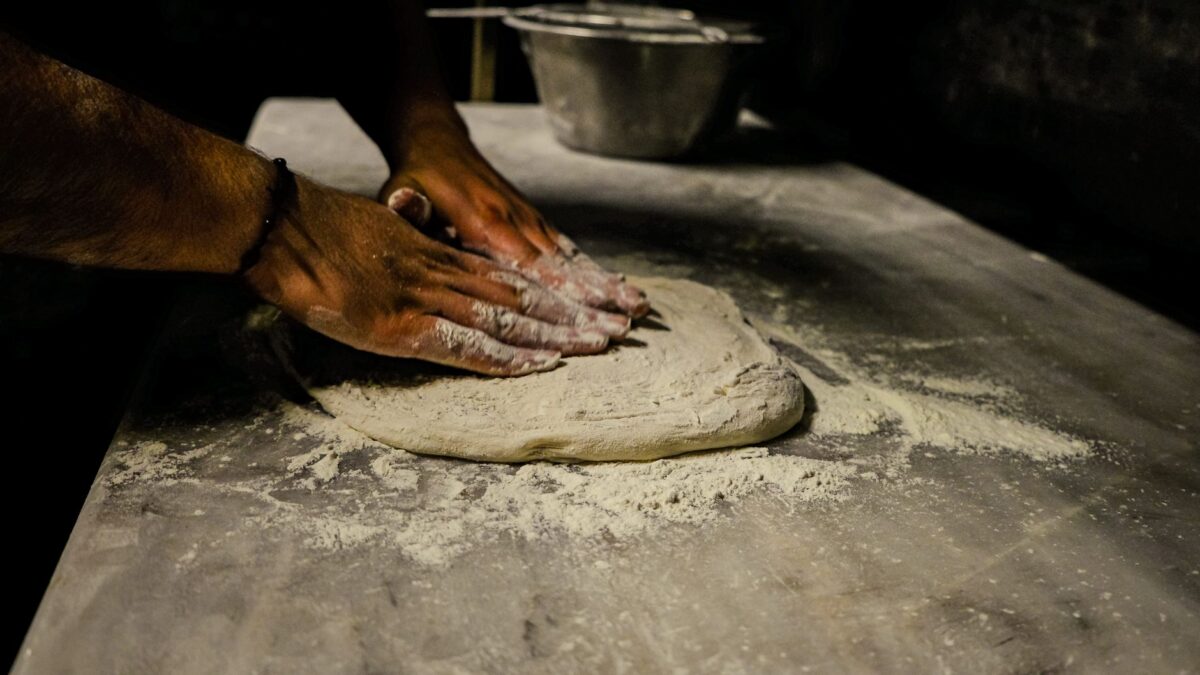
Yeast has no exact substitute, but three options work: baking powder, baking soda with an acid, or active sourdough starter. Baking powder and baking soda give a fast, chemical rise and a tighter, more cake-like or biscuit-like crumb. Sourdough starter is a living culture, so it raises dough the same way yeast does, only much more slowly. A packet of dry yeast holds about 2¼ teaspoons (7 g).
Why can’t baking powder match yeast exactly?
Yeast is a living organism that eats sugars in the dough and releases carbon dioxide and alcohol over hours, while baking powder releases gas within minutes through a chemical reaction. That difference in speed changes the finished loaf in three ways.
- Gluten has no long rest to develop, so the crumb is softer and more crumbly than a chewy yeast bread.
- The fermentation flavor (the slightly tangy, bready taste) is missing.
- The dough must go into the oven right after mixing, because the gas starts escaping once the liquid is added.
Recipes that need heavy kneading, long proofing or a tall, open crumb (baguettes, brioche, cinnamon rolls) lose the most. Flatbreads, pizza crust, soda-style loaves, biscuits and simple rolls lose the least.
How much baking powder replaces yeast?
Use about 1 to 1½ teaspoons of baking powder per 1 cup (about 125 g) of flour, which is the usual leavening level for quick breads and biscuits. A yeast recipe with 3 cups (375 g) of flour would therefore take roughly 1 tablespoon plus 1 teaspoon of baking powder, not an amount matched to the yeast packet.
- Whisk the baking powder into the dry ingredients so it spreads evenly.
- Skip any rising time and heat the oven first.
- Mix the liquid in until the dough just comes together. Long kneading toughens a baking powder dough.
- Shape quickly and bake at 375 to 425°F (190 to 220°C), checking early, because these doughs bake faster than yeast loaves.
Double-acting baking powder reacts once when wet and again in the oven heat, which gives some margin if shaping takes a few minutes. If the powder is old, test it first. The baking powder fizz test in this muffin troubleshooting guide takes under a minute. Anyone out of baking powder can start from the baking powder substitute ratios.
Can baking soda with an acid replace yeast?
Yes. Baking soda releases carbon dioxide as soon as it meets an acidic ingredient, so the pair works like homemade baking powder. A standard starting point is ¼ to ½ teaspoon of baking soda per 1 cup (125 g) of flour, matched with about ½ cup (120 ml) of an acidic liquid such as buttermilk, plain yogurt or kefir. Vinegar or lemon juice also works at around 1 teaspoon per ½ teaspoon of baking soda, mixed into the other liquid.
Timing matters more here than with baking powder. The reaction begins at once, so the dough or batter goes in the oven within a few minutes of mixing. Too much baking soda leaves a soapy, metallic taste and an overly brown crust, so stay near the low end of the range unless the recipe has plenty of acid. The comparison of baking powder and baking soda explains why the acid is needed, and the baking soda substitute guide covers the reverse swap.
This method gives the soda bread style of loaf: a dense, slightly tangy crumb with a craggy crust that is best eaten the day it is baked.
How do you use sourdough starter instead of yeast?
An active, bubbly sourdough starter can replace commercial yeast at roughly 1 cup (about 200 to 240 g) of starter for a standard recipe, with the flour and liquid in the recipe reduced to make room for what the starter contains. A starter at equal parts flour and water by weight is about half flour and half water, so remove about ½ cup (60 g) of flour and ½ cup (120 ml) of liquid from the recipe for each cup of starter added.
Fed starter that has doubled and shows bubbles throughout is ready to use. A starter straight from the refrigerator is sluggish and gives a poor rise. Expect these changes:
- The first rise takes roughly 4 to 12 hours at room temperature, far longer than the 1 to 2 hours typical of a packet-yeast dough.
- The crumb has a tangier flavor from the acids the starter produces.
- Bread keeps a little longer, because the acidity slows mold growth and staling.
Judge the rise by the dough, not the clock. When it has grown noticeably in volume and looks puffy, it is ready to shape. Cold kitchens slow the process and warm ones speed it up.
Which substitute fits which recipe?
Match the substitute to the type of bread, because each method suits a different result.
- Pizza dough and flatbread: baking powder gives a quick, crisp-edged result in about 20 to 30 minutes of total work.
- Dinner rolls and sandwich loaves: sourdough starter is the closest match, with a longer schedule.
- Quick loaves and biscuits: baking soda with buttermilk or yogurt, or baking powder, both work.
- Sweet enriched dough (cinnamon rolls, brioche): only sourdough starter, with a long rise, comes close. Baking powder produces a scone-like pastry, which is a different food.
Sugar and fat also affect rise. A heavily sweetened or buttery dough rises more slowly with starter, so allow extra time. For ideas on swapping those ingredients, see the guides on butter substitutes for baking.
What if the recipe only uses a little yeast?
Small amounts of yeast in recipes such as pancakes, waffles or some cookies can be replaced with baking powder at the usual quick-bread rate, and the result will usually be acceptable. The more a recipe relies on yeast for texture and flavor, the less a chemical leavener can stand in for it. When a recipe is built around a long proof, the honest answer is to buy yeast or use a starter.
Quick answers
Can I use baking powder instead of instant yeast one to one?
No. A one-to-one swap by spoonful over-leavens the dough. Use baking powder at about 1 to 1½ teaspoons per cup (125 g) of flour and skip the rising time.
Does the dough still need to rest if I use baking powder?
No. Rest time only helps yeast and starter doughs. A baking powder dough should be shaped and baked soon after mixing, before the gas escapes.
Will the bread taste like yeast bread?
Baking powder and baking soda doughs lack the fermented flavor. Sourdough starter supplies a tangy fermented taste of its own, which differs from the milder taste of commercial yeast.
Can I leave out the yeast and add nothing?
Without any leavener the dough bakes into a dense flatbread, a cracker or a flat cake of baked flour. That works only for recipes designed to be flat, such as tortillas or matzo-style crackers.