Why Are My Muffins Crumbly? 8 Causes and How to Fix Each One
Crumbly muffins usually come from too much flour, too little fat or egg, or overbaking. See the 8 common causes, the fix for each and how to cool them.
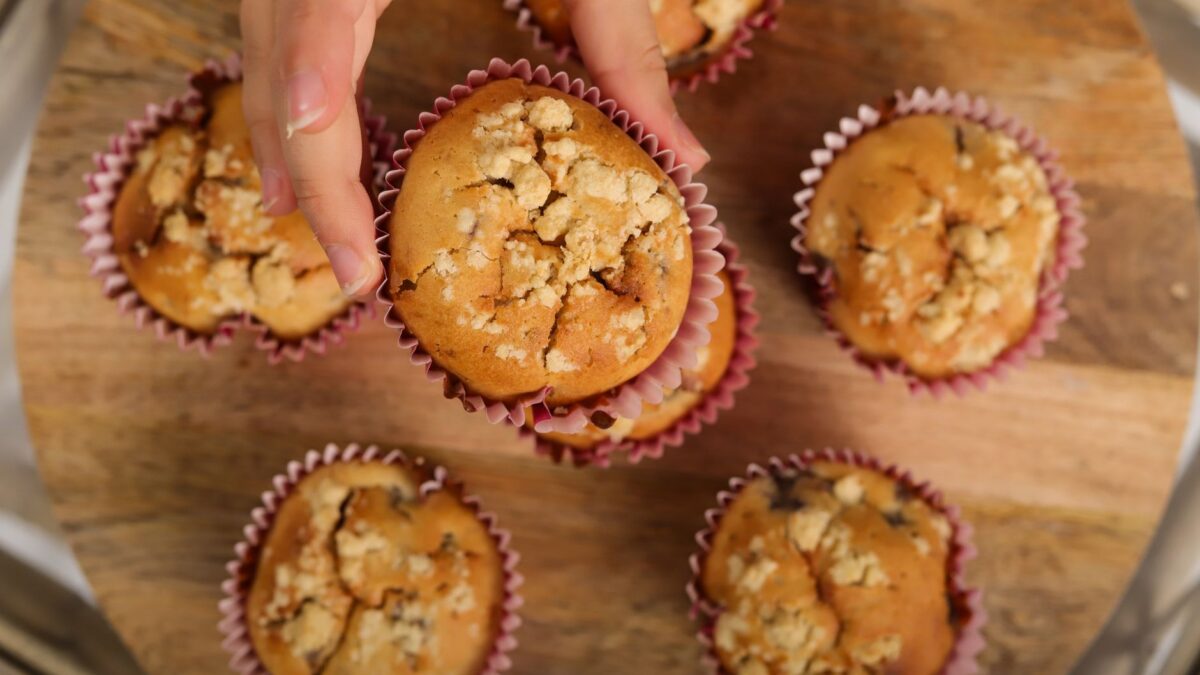
Muffins fall apart or turn crumbly when the batter has too much flour or too little fat, liquid or egg to hold the crumb together, or when they bake too long and dry out. Too much baking powder or soda, low-gluten flours and cutting or unmolding them while very hot also make them break. Most cases are fixed by measuring flour correctly, keeping a classic ratio of wet to dry ingredients and pulling the muffins out of the oven as soon as they are done.
What makes a muffin hold together?
A muffin holds its shape because three things set during baking: gluten from the flour, proteins from the egg and starch that swells with liquid. Fat and sugar keep that structure tender. When the balance tips toward dry ingredients, or when one of the binders is missing, the crumb sets loose and breaks into pieces.
A classic muffin batter for 12 muffins uses about 2 cups (250 g) of all-purpose flour, 1 egg, about 1 cup (240 ml) of milk and 1/4 to 1/2 cup (55 to 115 g) of melted butter or oil. Recipes vary, but a batter far drier than this is likely to bake up crumbly.
What are the most common causes of crumbly muffins?
Eight problems account for most crumbly or falling-apart muffins:
- Too much flour. Scooping the measuring cup straight into the bag packs the flour and can add a quarter more than the recipe intends.
- Too little fat. Cutting the butter or oil to make muffins lighter leaves the crumb dry and short.
- Too little liquid. Thick, stiff batter that has to be pushed off the spoon often bakes up crumbly.
- A missing or small egg. The egg is the main binder in most muffin recipes, and leaving it out or using a much smaller one weakens the structure.
- Too much leavening. Extra baking powder or soda makes large, weak air cells that collapse into crumbs.
- Overbaking. A few minutes too long dries the edges and the crumb together.
- Low-gluten or gluten-free flour. Whole wheat, oat, almond and gluten-free flours form little or no gluten, so the muffins need extra binding.
- Handling too soon. Muffins pulled from the pan or split open straight out of the oven have not finished setting.
How should I measure flour for muffins?
Weigh it, or spoon it into the cup and level it with a knife. A cup of all-purpose flour weighs roughly 120 to 125 g when spooned and leveled, while a scooped cup can weigh 150 g or more. Across 2 cups, that difference is enough to turn a moist muffin dry and crumbly. If you use a scale, follow the gram weights in your recipe. If the recipe gives cups only, spoon and level every time.
Can overbaking make muffins fall apart?
Yes. Overbaked muffins lose moisture, and a dry crumb has less to hold it together. Standard-size muffins usually bake at 375°F to 400°F (190°C to 200°C) for 18 to 22 minutes, and mini muffins take far less time. Start checking a few minutes before the shortest time in the recipe. A toothpick in the center should come out with a few moist crumbs, and the top should spring back when pressed lightly. An instant-read thermometer in the center reads about 200°F to 205°F (93°C to 96°C) when they are done. Ovens often run hot, so an oven thermometer helps. Our guide to doneness cues for moist muffins covers these signs in more detail.
Why do my healthy or gluten-free muffins crumble?
Whole-grain and gluten-free flours absorb more liquid and build less structure than all-purpose flour. Swapping them in cup for cup, while also cutting fat or sugar, removes several binders at once. These fixes help:
- Replace only part of the all-purpose flour with whole wheat flour at first, such as a quarter to a half.
- Add a little more liquid when using whole wheat or oat flour, and let the batter rest 10 to 20 minutes so the bran and oats soften.
- For gluten-free baking, use a blend that includes xanthan gum, or add a small amount if the blend has none, following the package directions.
- Use mashed banana, applesauce, yogurt or sour cream for part of the liquid. They add moisture and help bind the crumb.
- Keep at least one whole egg in the batter unless the recipe is built around an egg replacement.
Does too much baking powder make muffins crumbly?
It can. A common guideline is about 1 to 1 1/4 teaspoons of baking powder per cup of all-purpose flour, or about 1/4 teaspoon of baking soda per cup when the batter has an acid such as buttermilk or yogurt. Doubling either one makes the batter rise fast and then fall back, leaving a coarse, open crumb that breaks easily and can taste soapy or bitter. Measure leaveners with level spoons. Excess leavening also causes sunken centers, explained in why muffins sink in the middle.
How long should muffins cool before I remove or cut them?
Leave muffins in the pan for about 5 to 10 minutes, then move them to a wire rack. In those minutes, steam inside finishes setting the starch and the crumb firms up. Unmolding them right away tends to tear the sides, and splitting a muffin open while very hot makes it crumble. Leaving them in the pan much longer traps steam and makes the bottoms soggy. If the paper pulls away chunks of muffin, see our notes on muffins that stick to paper liners.
Can I rescue muffins that are already crumbly?
You can still use them. Warm crumbly muffins briefly and serve them with butter or jam, or break them up as a topping for yogurt or baked fruit. Dry crumbs can also go into a fruit crisp topping or a bread pudding. To keep the next batch moist, store cooled muffins in an airtight container at room temperature for a day or two, or freeze them for longer storage. The USDA Food Safety and Inspection Service has general guidance on safe storage and freezing of foods.
Quick answers
Why are my muffins crumbly on top but fine inside?
A dry, crumbly top usually means the oven runs hot or the muffins sat on a rack too close to the top heating element. Check the oven with a thermometer and bake on the middle rack.
Does overmixing make muffins crumbly?
Overmixing usually makes muffins tough with tunnels inside. Crumbly muffins come more often from too much flour, too little fat or egg, or overbaking. Stir only until no dry flour remains.
Can I add oil to make muffins less crumbly?
Yes. Oil keeps muffins softer and moister than the same amount of butter because it stays liquid at room temperature. If a recipe is too lean, bringing the fat to about 1/3 to 1/2 cup (80 to 120 ml) for 12 muffins often helps.
Why do my muffins fall apart when I add a lot of fruit or nuts?
Large amounts of add-ins break up the crumb and leave less batter to hold each muffin together. Keep add-ins to about 1 to 1 1/2 cups for a 12-muffin batch.