Evaporated Milk Substitute for Pumpkin Pie and What Changes
Half-and-half is the easiest evaporated milk substitute for pumpkin pie. See ratios for cream, milk and condensed milk, and how each changes the filling.
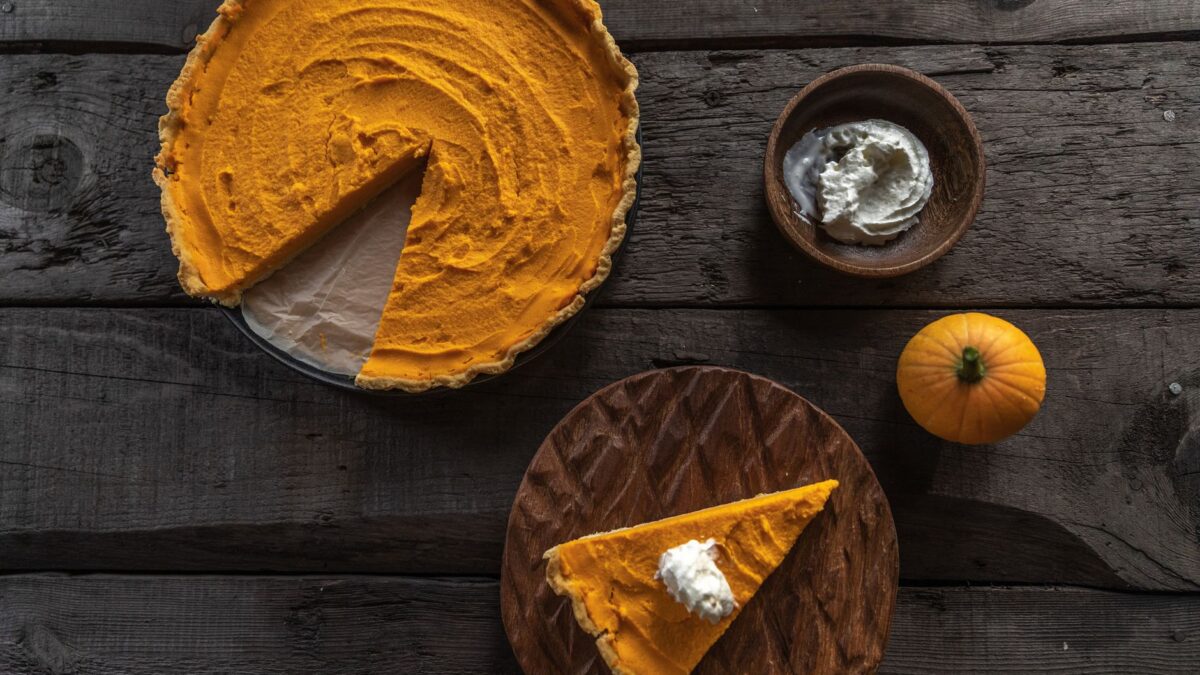
The simplest evaporated milk substitute for pumpkin pie is an equal amount of half-and-half or light cream. The filling will be a little richer and slightly softer, but it sets well. Sweetened condensed milk can work too if you cut back the sugar, while plain whole milk makes a thinner filling and needs a small adjustment.
Why pies use evaporated milk
Evaporated milk is milk with about 60 percent of its water removed. It adds dairy richness with less water than milk, which helps the custard set smooth without a runny center. Any swap should keep roughly the same balance of liquid, fat and protein.
A standard 12-ounce (354 ml) can holds about 1 1/2 cups. Recipes such as the classic pumpkin pie with canned pumpkin and evaporated milk usually call for one can or a portion of it, so measure your replacement against that amount.
Substitutes and ratios
Half-and-half
Use 1 1/2 cups (355 ml) half-and-half for a 12-ounce can. This is the closest everyday swap. The pie tastes a bit creamier and the texture is soft but sliceable.
Heavy cream or whipping cream
Use 1 1/2 cups (355 ml), or for a lighter result use 3/4 cup (180 ml) cream plus 3/4 cup (180 ml) whole milk. Straight heavy cream gives a very rich, dense filling. The mixed version is closer to the original.
Whole milk
Use 1 1/2 cups (355 ml) whole milk, but the filling will be looser and may need a few extra minutes in the oven. To compensate, you can simmer 2 cups (475 ml) of milk until it reduces to about 1 1/2 cups (355 ml), then let it cool.
Sweetened condensed milk
Condensed milk is much sweeter and thicker than evaporated milk. If you use it, replace the evaporated milk with about 1 cup (about 300 g) sweetened condensed milk plus 1/2 cup (120 ml) of milk or water, and reduce the sugar in the recipe sharply, often by about half, then taste the batter if your recipe allows. Do not swap it one-for-one without cutting the sugar.
Dairy-free options
Full-fat canned coconut milk is the usual choice at 1 1/2 cups (355 ml). It adds a mild coconut flavor. Other plant milks are thinner. See the dairy-free baking swaps for more.
What changes in the pie
- Richness. More fat from cream or half-and-half gives a creamier bite.
- Set. Lower-fat or thin liquids can leave the center softer. Bake until the edges are set and the center barely jiggles.
- Sweetness. Condensed milk raises the sugar level and can darken the surface.
- Flavor. Evaporated milk has a slightly cooked, caramel note that fresh dairy lacks. A tiny extra pinch of salt or spice balances it.
- Cracks. Overbaking causes cracks with any liquid. Pull the pie when the center is just set and cool it gradually.
Tips for a good result
- Measure the liquid carefully so the total stays near the original.
- Bring cold dairy and eggs to near room temperature for a smoother mix.
- Whisk until just combined; too much air can make the surface bubbly.
- Bake at the temperature in your recipe, commonly 350 to 425 °F (175 to 220 °C) in stages. Pies are done when an inserted knife near the center comes out almost clean.
- If you need a spice blend, try a homemade pumpkin pie spice.
Storage
Pumpkin pie is an egg and dairy custard. Cool it, then refrigerate within two hours of baking. Covered, it keeps for about three to four days in the fridge. The guide on make-ahead pumpkin pie covers timing and cracks.
Quick answers
Can I use regular milk instead of evaporated milk?
Yes, but the pie will be softer. Reducing the milk first or using half-and-half gives a better set.
Is evaporated milk the same as condensed milk?
No. Condensed milk is sweetened and thick. Evaporated milk is unsweetened. Swapping them without adjusting sugar makes a very sweet pie.
Can I use powdered milk?
You can mix it with less water than the package says to make a thicker liquid, but it is trickier to get right than half-and-half.
Will cream make the pie crack?
Not by itself. Cracking comes mostly from overbaking or a sudden temperature change.