How to Blind Bake a Pie Crust: Weights, Temperature, Time and No Slumping
Blind bake a pie crust with pie weights at 375 to 400°F, then bake it uncovered until set. Learn how to chill, dock and weigh the dough so the sides stay tall.
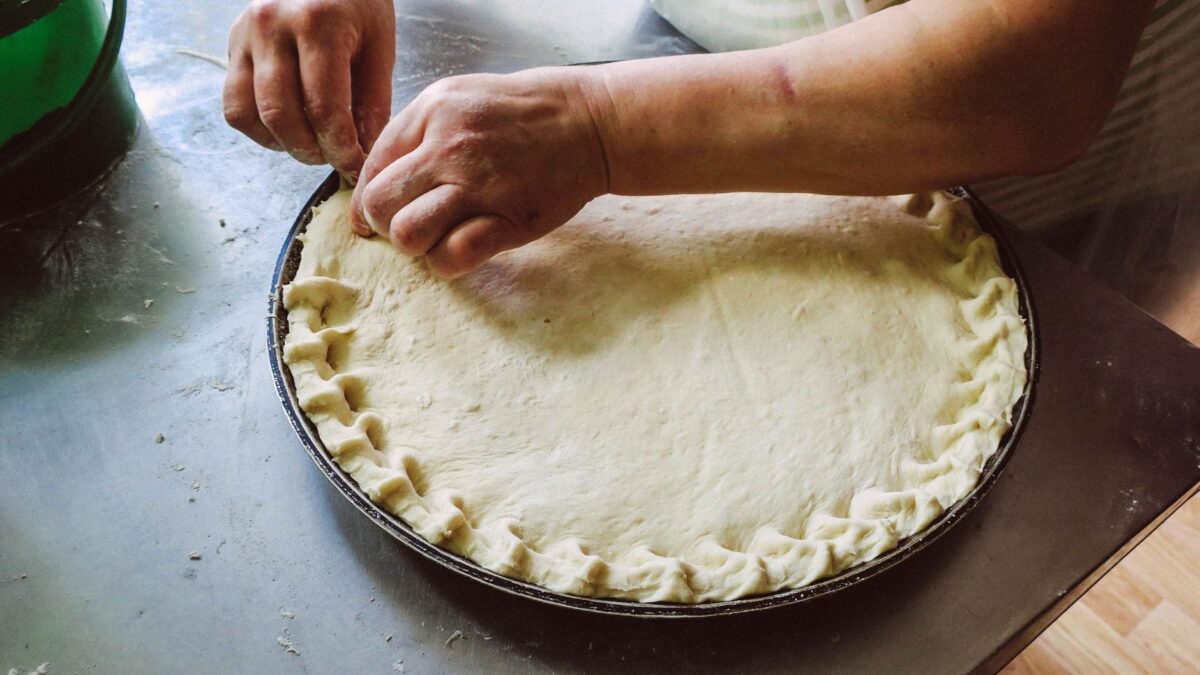
To blind bake a pie crust, chill the shaped dough until firm, line it with parchment, fill it with pie weights, and bake at 375 to 400°F (190 to 200°C) for about 15 to 20 minutes. Then lift out the weights and bake another 5 to 15 minutes, depending on whether the filling will bake further. Chilling the dough well and pressing it into the pan without stretching it are what keep the sides from slumping.
When you need to blind bake
Blind baking means baking a crust before it holds a filling. You do it for two reasons. A partially baked crust gets a head start so it stays crisp under a wet filling, such as custard, pumpkin or quiche, that will finish baking in the oven. A fully baked crust is cooked all the way through for fillings that never go in the oven, such as pastry cream, lemon curd, fresh fruit or chilled cream pies.
If you are making a pumpkin pie ahead of time, our guide to how far ahead to bake pumpkin pie covers storage after baking.
Start with the right dough
Slumping usually begins with dough that is too warm or too stretched. Use a dough that has rested in the refrigerator for at least an hour after mixing. If you need a reliable base, an all-butter pie crust from scratch explains mixing, chilling and rolling in detail.
- Roll the dough to about 1/8 inch (3 mm) thick and 2 inches (5 cm) wider than the top of the pan.
- Ease it into the pan by lifting the edge and letting the dough settle into the corners. Do not pull or stretch it, because stretched dough shrinks back as it bakes.
- Trim the overhang to about 1/2 to 1 inch (1 to 2.5 cm), fold it under and crimp or press with a fork.
- Prick the bottom and sides lightly with a fork. This is called docking, and it lets steam escape.
- Freeze the shaped crust for 20 to 30 minutes, or chill it in the refrigerator for at least 1 hour, until firm to the touch.
What to use as pie weights
Weights press the crust against the pan while the fat melts and the structure sets. Good options include:
- Ceramic or metal pie weights, which are reusable and hold heat evenly.
- Dried beans or uncooked rice, which work well. Keep them for baking use only, since they will not cook properly afterward.
- Granulated sugar, which can also be used, though it is best saved for this purpose.
Line the crust with a large piece of parchment paper, pressing it into the corners and up the sides. Fill the crust right to the top with weights, especially around the edges, because that is where slumping happens. Under-filling is a common cause of collapsed sides.
Temperature and time
Place the pan on a baking sheet in the center or lower third of a preheated oven. The sheet makes the pan easier to move and helps the bottom brown.
- Weighted bake: 375 to 400°F (190 to 200°C) for 15 to 20 minutes, until the edges look set and start to turn pale gold.
- Weights off, partial bake: lift the parchment and weights out together, then bake another 5 to 8 minutes until the bottom looks dry and no longer shiny. This is ready for most baked fillings.
- Weights off, full bake: bake another 10 to 15 minutes, until the whole crust is a deep golden color.
Ovens vary, so rely on color and texture as much as the clock. If your oven has a convection setting, the crust may brown faster, and baking in a convection oven explains how to adjust time and temperature. If the edges brown too quickly, cover them with a ring of foil or a pie shield.
Keeping the sides from slumping
- Chill the shaped crust until it is truly firm before it goes into the oven.
- Do not stretch the dough into the pan.
- Build a thicker rim by folding the overhang under, which gives the sides extra support.
- Fill the weights to the rim and pack them against the sides.
- Start hot. A preheated oven sets the fat and starch quickly, before the dough has time to sag.
- Use a metal or glass pan and place it on a preheated baking sheet for fast heat to the bottom.
Fixing common problems
- Puffed bottom: if the base bubbles up after the weights come out, gently press it down with the back of a spoon while the crust is still hot.
- Cracks: patch small cracks with a bit of leftover raw dough pressed in, or brush with a thin layer of beaten egg, and bake for a few more minutes. Egg also seals the crust for very wet fillings.
- Shrinking: usually a sign of overworked or stretched dough, or too little rest. Rest the dough longer next time.
- Soggy bottom: bake the crust longer before filling, and fill it only when both are ready to go in the oven.
Storing a blind-baked crust
A fully baked, cooled crust can sit covered at room temperature for a day, or be wrapped well and frozen for a few weeks. If you are making a recipe like pecan pie bars, a shortbread base is often partly baked first in the same way.
Quick answers
Do I have to use pie weights?
For the best result, yes. Without weights, the sides tend to slump and the bottom puffs. A tightly stacked layer of parchment and dried beans is a good substitute if you do not own weights.
Can I skip blind baking?
For fruit pies with a top crust, it is often unnecessary. For custard, pumpkin and cream pies, it helps prevent a pale, soggy base.
Should I grease the pan?
Not for an all-butter crust. The dough has enough fat of its own, and a greased pan can make the edges slide down.
Why is my crust still pale after the baking time?
Ovens run differently, and dark pans brown faster than light ones. Add a few minutes and check the color rather than following the time exactly.