How Long to Bake Chicken Breast at 350, 375, 400 and 425°F
Bake times for boneless and bone-in chicken breast at 350, 375, 400 and 425°F, plus the safe internal temperature of 165°F and how to check it.
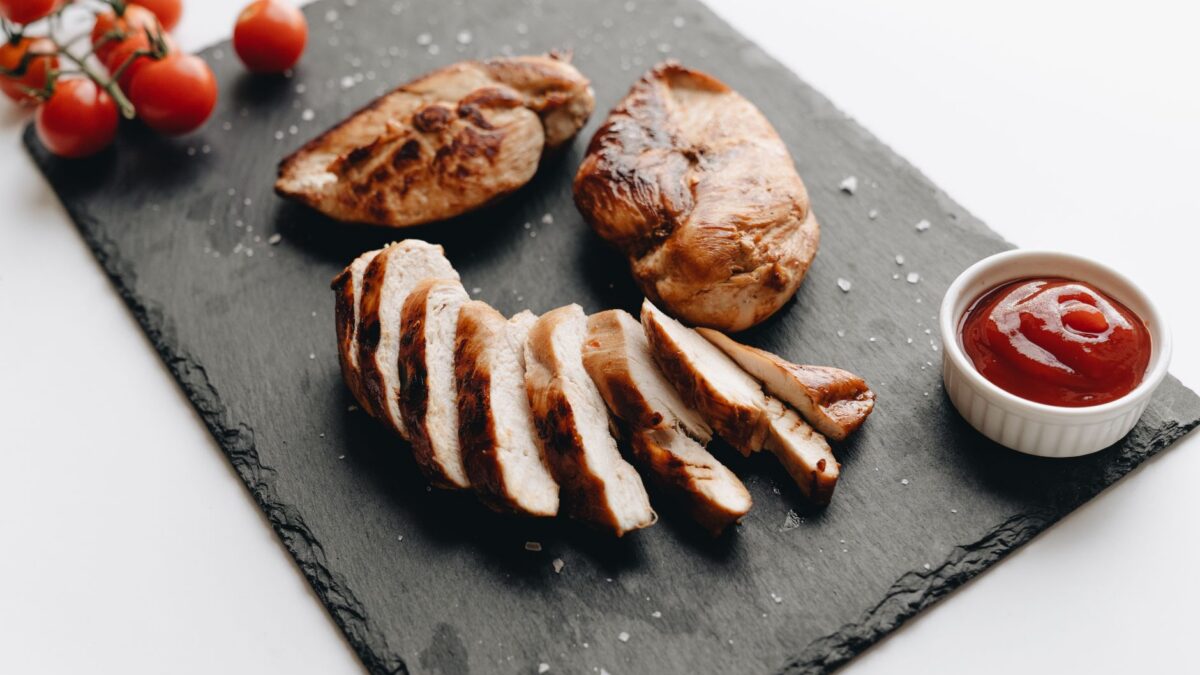
Boneless, skinless chicken breasts of 6 to 8 ounces (170 to 225 g) usually bake in about 15 to 30 minutes, depending on oven temperature: roughly 25 to 30 minutes at 350°F (175°C), 20 to 25 at 375°F (190°C), 18 to 22 at 400°F (200°C) and 15 to 20 at 425°F (220°C). Whatever the clock says, chicken is safe when the thickest part reaches an internal temperature of 165°F (74°C).
Chicken breast bake times by oven temperature
These ranges are for boneless, skinless breasts of roughly 6 to 8 ounces (170 to 225 g) and about 1 inch (2.5 cm) thick, placed on a rimmed sheet or in a baking dish in a preheated oven. Ovens vary, so use the time as a guide for when to start checking.
- 350°F (175°C): about 25 to 30 minutes. Gentle and forgiving, but the surface browns less.
- 375°F (190°C): about 20 to 25 minutes. A good all-purpose choice.
- 400°F (200°C): about 18 to 22 minutes. Better browning with a shorter bake.
- 425°F (220°C): about 15 to 20 minutes. Fast and well browned, but thin ends can dry out quickly.
Bone-in and larger breasts
Bone-in, skin-on breasts are bigger and take longer. As a general guide, expect about 35 to 45 minutes at 375°F (190°C) or about 30 to 40 minutes at 400°F (200°C), and sometimes more for very large breasts. Very large boneless breasts of 10 ounces (280 g) or more may need 5 to 10 minutes beyond the ranges above. The bone does not make the chicken safe sooner, so always check the temperature.
The safe internal temperature
Food-safety guidance in the United States says poultry should reach 165°F (74°C) measured with a food thermometer. Color and juices are not reliable: cooked chicken can look slightly pink, and undercooked chicken can look done.
- Insert an instant-read thermometer into the thickest part of the breast, away from the bone and the pan.
- Check the thickest breast, because pieces differ in size.
- If it reads below 165°F (74°C), return it to the oven and check again after a few minutes.
Some cooks pull the chicken at a few degrees below 165°F and let it rest, since the temperature keeps rising. The official safe number is still 165°F (74°C), so make sure it reaches that, during resting if you rely on carryover.
How to get juicy chicken breast
- Even thickness. Pound the thick end gently, or butterfly the breast, so it cooks evenly.
- Dry the surface. Pat with paper towels, then coat lightly with oil and season with salt and pepper or a spice mix.
- Preheat fully. Put the chicken in a hot oven, not one still warming up.
- Do not crowd the pan. Leave space so the chicken roasts rather than steams.
- Rest 5 to 10 minutes. Loosely tent with foil so juices redistribute.
- Brining. Soaking in a salt-water solution for a short time before baking can help keep breasts moist.
Food safety notes
- Do not wash raw chicken. Rinsing spreads bacteria around the sink.
- Use separate cutting boards and wash hands, knives and surfaces with hot, soapy water after handling raw chicken.
- Thaw chicken in the refrigerator, in cold water or in the microwave, not on the counter. Chicken baked from frozen takes roughly half again as long and needs the same temperature check.
- Refrigerate leftovers within 2 hours, and eat them within 3 to 4 days.
The same thermometer habit applies to other bakes. Our guide to raw eggs in baking and safe temperatures explains why measuring beats guessing, and the muffin time and temperature chart is a useful companion if you bake on the same day.
Troubleshooting
The chicken is dry
It was probably baked past 165°F (74°C), was very thin in places, or was not rested. Next time check earlier, even out the thickness, or lower the oven temperature slightly.
The outside is done but the inside is raw
The breast was too thick or the oven too hot. Lower the temperature to 350 to 375°F (175 to 190°C), cover loosely with foil and continue until 165°F (74°C).
The chicken has no color
Use 400 to 425°F (200 to 220°C), dry the surface, add a little oil, or finish under the broiler for a minute or two, watching closely.
The meat is rubbery or stringy
This can be overcooking. Rarely, it comes from a texture issue in some commercial chicken known as woody breast, which is not a safety problem.
Quick answers
Should I cover chicken breast with foil when baking?
Covering holds in moisture but gives less browning. Many cooks bake uncovered, or cover only if the surface is browning faster than the inside is cooking.
Is it safe if chicken is still a little pink at 165°F?
Yes, if a thermometer in the thickest part reads 165°F (74°C), slight pinkness can occur and is not a sign of undercooking.
Can I bake chicken breasts straight from the freezer?
You can, but it takes longer and cooks less evenly. Thawing in the refrigerator first is better. Either way, verify 165°F (74°C).
What temperature is best for baking chicken breast?
For most cooks 375 to 400°F (190 to 200°C) gives a good balance of browning and juiciness.