Dairy-Free Baking Swaps: Plant Milks, Vegan Butter and Coconut Cream That Work
Most muffins and quick breads go dairy-free with simple 1:1 swaps. Knowing how plant milks and vegan butters differ in protein and fat helps you pick the right one.
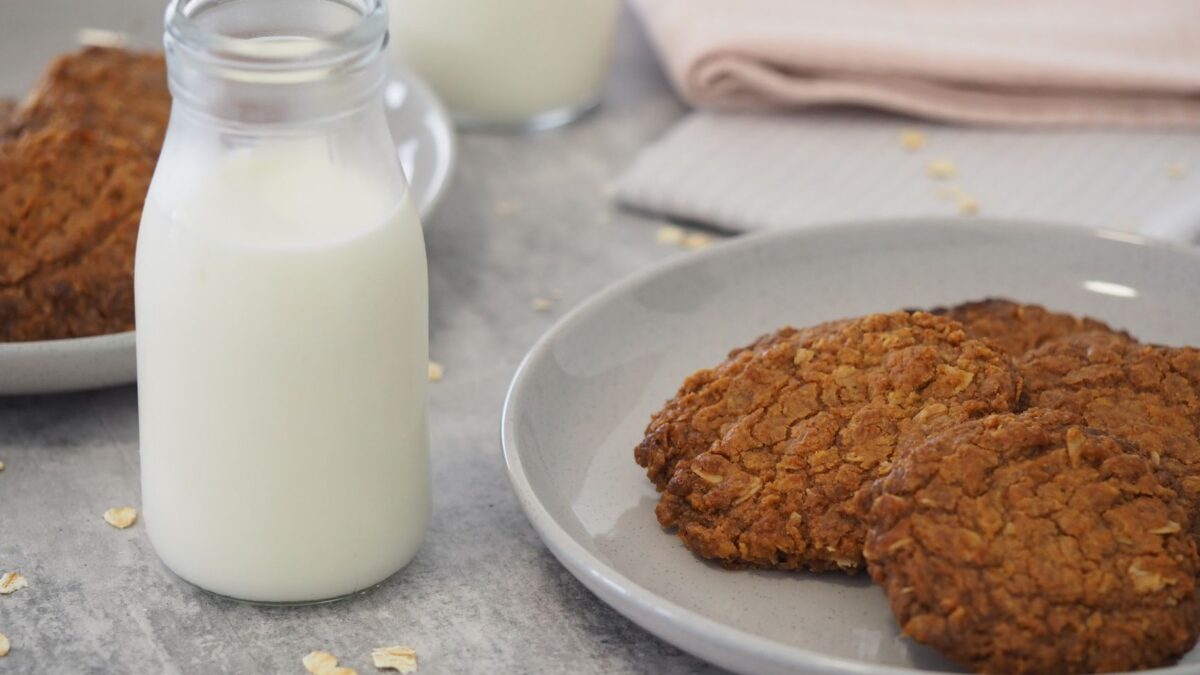
For most muffins, quick breads and cakes, dairy-free baking comes down to three swaps: unsweetened soy or oat milk for milk, 1:1; a firm vegan butter block or neutral oil for butter; and canned coconut cream for heavy cream. Soy milk behaves most like cow’s milk because of its protein. Always check labels, because “non-dairy” on a package does not guarantee the product is free of milk ingredients.
Why dairy matters in baking
Milk, butter and cream each bring different things to a batter:
- Milk adds water, protein and lactose (milk sugar). The protein helps structure and the sugar and protein both help browning.
- Butter adds fat (at least 80% under the US standard), water and flavor, and when creamed it traps air.
- Cream and sour cream add fat and thickness; cultured products add acid that reacts with baking soda.
Plant-based products can replace each of these, but they differ in protein, fat and sugar, which shows up in browning, rise and tenderness.
Plant milks compared
| Milk (unsweetened, per cup) | Protein | Baking behavior | Best for |
|---|---|---|---|
| Cow’s milk (reference) | About 8 g | Good browning and structure | Everything |
| Soy milk | About 7 g | Closest to dairy; browns well; curdles for “buttermilk” | Cakes, cupcakes, muffins |
| Oat milk | About 2–3 g | Creamy, slightly sweet; good moisture | Muffins, quick breads, pancakes |
| Almond milk | About 1 g | Thin; paler bakes, slightly less structure | Muffins, cookies, recipes with little milk |
| Canned coconut milk (full-fat) | Low | Very rich; adds fat, tender crumb | Cakes, frostings, rich muffins (often thinned) |
| Rice milk | Very low | Thin and sweet; weakest structure | Recipes where milk is a minor ingredient |
Protein figures are approximate and vary by brand, so check the nutrition panel. Mayo Clinic, for example, puts cow’s milk at a little over 8 g of protein per cup and soy milk at about 7 g. Fortified products also vary in calcium and vitamins.
How to choose
- Use unsweetened, unflavored milk so you control the sugar and vanilla.
- For cakes and cupcakes, pick soy for the most dairy-like rise and crumb.
- For muffins and quick breads, any of soy, oat or almond works; swap 1:1 by volume.
- For recipes that call for buttermilk, sour the plant milk: 1 tablespoon lemon juice or vinegar topped up to 1 cup, rested 5–10 minutes. Soy thickens best. See buttermilk substitute.
Butter: vegan blocks, oil and coconut oil
Dairy-free butter alternatives fall into three groups:
- Vegan butter blocks or sticks are made for baking and can replace butter 1:1 in creamed cakes, cookies and pastry. Look for a fat content near 80%, similar to dairy butter. Soft tub spreads often contain more water and less fat, and make flat cookies and pale, soft crusts.
- Neutral oil works in melted-butter recipes such as most muffins and quick breads, at about 3/4 the amount of butter.
- Coconut oil is solid below about 76°F (24°C), so it can replace solid or melted butter 1:1. Refined coconut oil has little flavor.
Amounts and texture changes are in the full butter substitutes guide. Vegan butters can be saltier than unsalted dairy butter; taste or check the label and reduce added salt if needed.
Cream, sour cream and yogurt
| Dairy ingredient | Dairy-free swap | Notes |
|---|---|---|
| Heavy cream (in batter) | Full-fat canned coconut milk, or coconut cream thinned with a little plant milk | Shake the can; 1 cup canned coconut milk weighs about 241 g per King Arthur’s chart |
| Whipped cream | Chilled coconut cream, whipped | Chill the can overnight and whip only the solid part |
| Sour cream or yogurt | Plain unsweetened soy or coconut yogurt, 1:1 | Keeps the acid for baking soda recipes |
| Cream cheese frosting | Plant-based cream cheese with vegan butter | Softer than dairy versions; chill before piping |
| Butter in buttercream | Vegan butter block, with a little vegetable shortening for stability | See simple buttercream |
Expect these differences
- Paler color. Lower-protein plant milks brown less. Bake to doneness cues rather than color, and use the toothpick test.
- Slightly less rise in cakes made with almond or rice milk. Soy milk narrows the gap.
- Coconut flavor from virgin coconut oil and coconut milk. Refined oil and soy milk are more neutral.
- Softer frostings, because many plant fats melt at lower temperatures.
Reading allergen labels
If you bake for someone with a milk allergy rather than a preference, labels matter more than recipes. In the US, milk is one of nine major food allergens that must be declared on packaged foods, according to the FDA. Keep these points in mind:
- “Non-dairy” is not the same as milk-free. Some products labeled non-dairy, such as certain creamers, contain milk proteins like caseinate. Read the ingredient list and the “Contains” statement.
- “Lactose-free” milk is still dairy, with the milk protein intact. It is not safe for a milk allergy.
- “May contain” or “made in a facility” statements are voluntary, and their absence does not guarantee there is no cross-contact.
- Plant milks carry their own allergens. Soy is a major allergen, almond and cashew are tree nuts, and some oat milks are processed alongside wheat. Choose oat products labeled gluten-free if gluten is also a concern.
- Check chocolate chips and margarine. Many contain milk solids or whey.
This is general information, not medical advice. People with food allergies should follow their doctor’s or allergist’s guidance.
Bottom line
Use unsweetened soy milk for cakes and any unsweetened plant milk for muffins, swapping cup for cup. Replace butter with an 80%-fat vegan block in creamed recipes, or with three-quarters as much oil in melted-butter recipes. Use coconut cream for cream and soy or coconut yogurt for sour cream. And for allergies, read the whole label every time.
FAQ
Which plant milk is best for dairy-free muffins?
Soy and oat milk both work very well. Soy gives the best browning and structure; oat milk gives a moist, tender crumb. Almond milk is fine but makes slightly paler muffins.
Can I use sweetened vanilla plant milk?
You can, but it adds sugar and flavor. Reduce the recipe’s sugar slightly and leave out some of the vanilla, or keep unsweetened milk for baking.
Is ghee dairy-free?
No. Ghee is clarified butter. Most milk solids are removed, but traces of milk protein can remain, so it is not suitable for a milk allergy.
Do dairy-free bakes keep as long?
Storage times are similar. Muffins made with oil often stay soft a little longer. Follow the same room-temperature, refrigerator and freezer guidance as for regular bakes.