Sweet Tart Dough (Pâte Sucrée): Mixing, Chilling, Blind Baking
Pâte sucrée is a sweet, cookie-like tart dough: mix butter, powdered sugar, yolk and flour, chill it twice, then blind bake at 350-375°F (175-190°C).
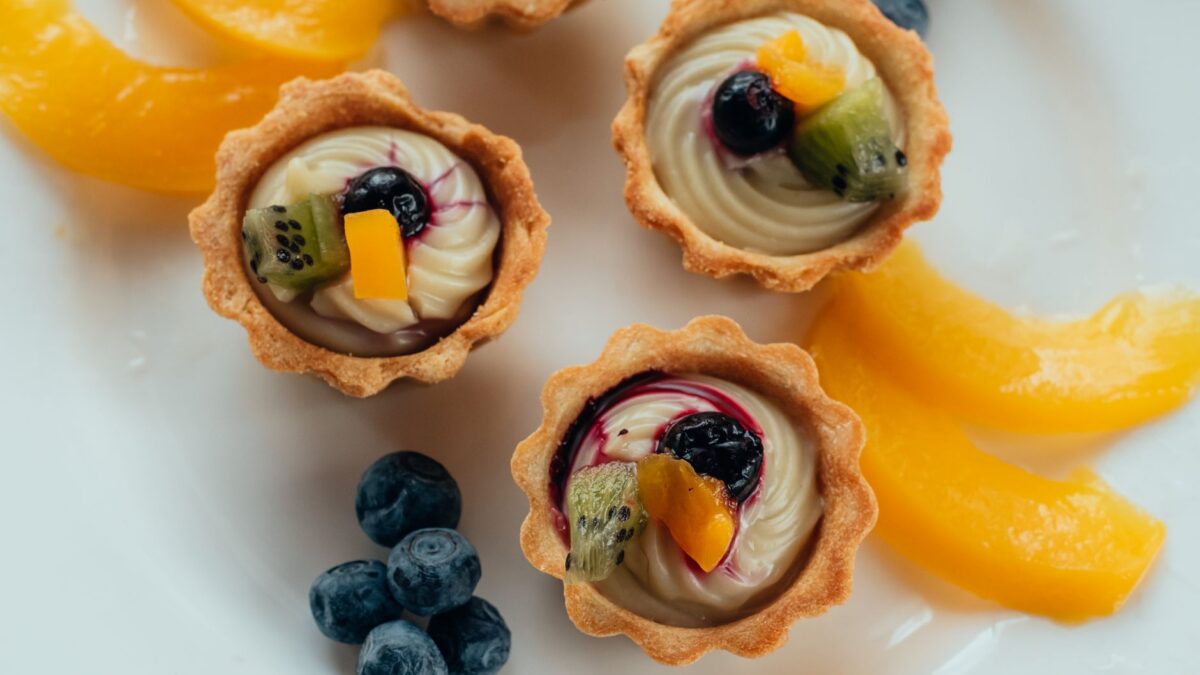
Pâte sucrée is a French sweet tart dough made from flour, powdered sugar, butter and egg yolk. It bakes into a crisp, fine-crumbed shell closer to a shortbread cookie than a flaky pie crust. A 9-inch (23 cm) shell needs about 1 1/4 cups (155 g) flour, 1/3 cup (40 g) powdered sugar, 1/2 cup (113 g) cold butter, 1 egg yolk, a pinch of salt and 1 to 2 tablespoons cold water. It takes about 20 minutes of work and at least 2 hours of chilling before baking.
What goes into pâte sucrée?
The base recipe has five ingredients plus water, and every one has a job. Flour gives structure, butter gives richness and a short texture, powdered sugar sweetens and keeps the dough fine, the yolk binds, and a little salt rounds out the flavor.
- 1 1/4 cups (155 g) all-purpose flour
- 1/3 cup (40 g) powdered sugar
- 1/4 teaspoon fine salt
- 1/2 cup (113 g) cold unsalted butter, cut into small cubes
- 1 large egg yolk
- 1 to 2 tablespoons cold water, only if the dough is dry
- 1/2 teaspoon vanilla extract (optional)
Powdered sugar is the traditional choice because it dissolves into the butter without leaving grit. Granulated sugar works but gives a slightly coarser, crunchier crust. A pâte sucrée has more sugar and more fat than a standard pie dough, so it is tender and a little fragile, and it is rolled and handled differently.
How do you mix the dough without making it tough?
Work quickly with cold butter and stop mixing as soon as the dough holds together. Gluten forms when flour meets water and is worked, and a tart shell should stay tender, so the less you knead, the better. The explanation of what gluten does in baking covers why.
- Whisk the flour, powdered sugar and salt in a bowl, or pulse them in a food processor.
- Add the butter cubes and rub or pulse them in until the mixture looks like coarse sand with a few pea-sized bits.
- Stir the yolk with the vanilla, add it, and mix until clumps form.
- If the clumps will not press together, add water a teaspoon at a time.
- Tip the dough onto the counter and smear it once or twice with the heel of your hand to blend the butter, then gather it into a disk.
The dough will feel softer and stickier than pie dough. That is normal for a high-butter dough, and chilling firms it up.
How long should the dough chill?
Chill the wrapped disk for at least 1 hour, and 2 hours or overnight is better. Cold rests the gluten and firms the butter so the dough rolls cleanly instead of smearing. It keeps in the refrigerator for 2 to 3 days, or in the freezer for about 1 to 2 months if wrapped airtight. Thaw frozen dough overnight in the refrigerator.
A second chill matters just as much. After the dough is in the pan, freeze it for 15 to 30 minutes, or refrigerate it for an hour. A well-chilled shell shrinks and slumps much less in the oven. The tips for all-butter pie crust use the same principle.
How do you roll and line the tart pan?
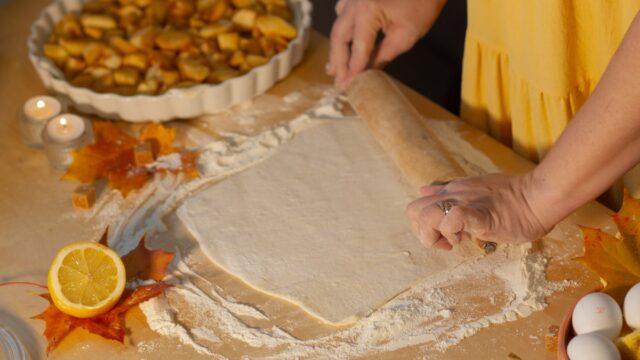
Roll the dough between two sheets of parchment or on a lightly floured counter to about 1/8 inch (3 mm) thick, a few inches wider than the pan. Sweet dough cracks easily, so work when it is cool but pliable. If it is rock hard from the refrigerator, wait 5 to 10 minutes.
- Use a tart pan with a removable bottom, 9 to 10 inches (23 to 25 cm) across, with fluted sides.
- Lift the dough by rolling it loosely around the rolling pin, then unroll it over the pan.
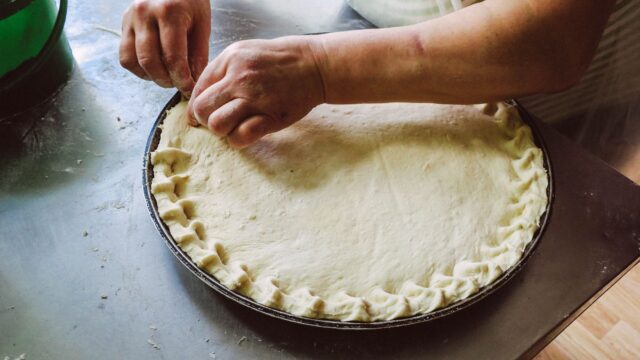
- Ease the dough into the corners with your fingertips. Do not stretch it, because stretched dough shrinks back as it bakes.
- Press it firmly into the fluted edge and trim the extra by rolling the pin across the rim.
- Patch any tear with a scrap of dough, pressed in and smoothed with a finger.
- Prick the bottom lightly with a fork, then freeze the shell.
Dough that is too warm sticks, tears and shrinks. If it softens at any point, slide it back into the refrigerator for 10 minutes.
How do you blind bake a tart shell?
Blind baking means baking the shell empty, with weights holding it in place, so it is crisp before a wet filling goes in. Bake at 350 to 375°F (175 to 190°C) in two stages.
- Heat the oven, with a rack in the lower third, and set the pan on a baking sheet.
- Line the frozen shell with parchment or foil that reaches up the sides, and fill it to the rim with dried beans, rice or pie weights.
- Bake for 15 to 20 minutes, until the edges look set and lightly golden.
- Lift out the paper and weights. The bottom will look pale and slightly raw.
- Bake 5 to 15 minutes more, until the whole shell is an even golden color. Use the full time for fillings that are not baked again, such as pastry cream or fresh fruit, and the shorter time for fillings that bake in the shell.
If the bottom puffs while baking uncovered, press it down gently with the back of a spoon. For a filling that needs more baking, like a custard, brush the hot shell with a thin layer of beaten egg white and return it to the oven for 2 minutes. The egg white sets into a seal. The guide to preventing a soggy bottom explains more about pan choice and sealing.
Why did my tart shell shrink, crack or turn out tough?
- Shrinking: the dough was stretched into the pan, overworked, or not chilled before baking. Ease it in loosely and freeze it first.
- Cracking while rolling: the dough is too cold or too dry. Let it sit for a few minutes, or work in a teaspoon of water next time.
- Greasy, slumping sides: the butter melted before the dough set. Chill longer and bake in a fully preheated oven.
- Toughness: too much mixing or too much water. Stop as soon as the dough holds together.
- Pale bottom: too short a second bake, or a thick, light-colored pan. Bake the second stage a few minutes longer and use the lower rack.
Cooled shells keep in an airtight container at room temperature for 1 to 2 days. Cutting the dough into shapes works too, and the notes on cut-out sugar cookies cover chilling and cutting similar doughs.
Quick answers
What is the difference between pâte sucrée and pâte sablée?
Both are sweet French tart doughs. Pâte sablée is usually made by creaming the butter and sugar first, which gives a sandier, more crumbly shell. Pâte sucrée is made by rubbing cold butter into the flour, which gives a slightly firmer, more even crust.
Can I make pâte sucrée ahead?
Yes. Wrap the disk tightly and refrigerate it for 2 to 3 days or freeze it for 1 to 2 months. A shell lined in the pan can also be frozen, ready to bake straight from the freezer.
Is it safe to taste the raw dough?
No. Raw flour and raw egg can carry bacteria, and the U.S. Food and Drug Administration advises against eating raw dough. Bake the shell fully before eating any of it.