Cherry Pie With Frozen or Canned Cherries: Thickener and Bake Time
Use 3 to 4 tablespoons of cornstarch for a 9-inch cherry pie, and bake 55 to 65 minutes. See how frozen and canned cherries change the amounts and timing.
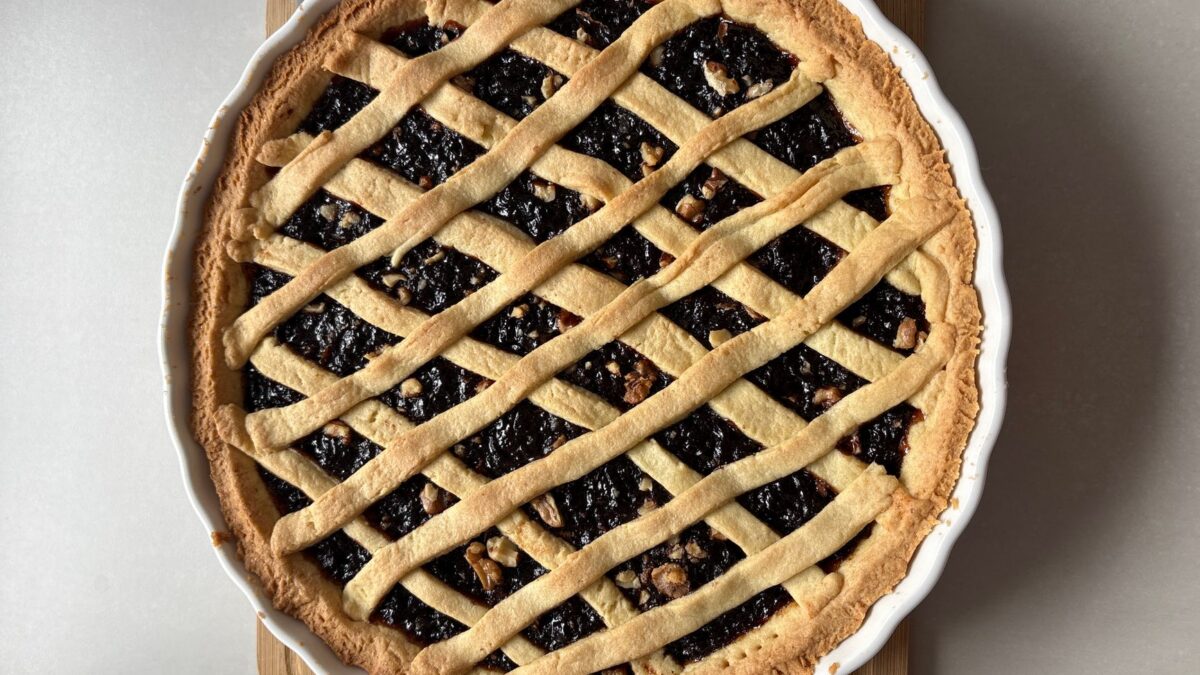
A 9-inch cherry pie made with frozen or drained canned cherries needs about 3 to 4 tablespoons of cornstarch (roughly 25 to 35 g) for 5 to 6 cups (about 750 to 900 g) of fruit. Bake it at 400°F (200°C) for 20 minutes, then at 350°F (175°C) for 35 to 45 minutes more, until the filling bubbles thickly in the center. Frozen cherries baked without thawing need 10 to 15 minutes beyond that. Canned cherry pie filling is already thickened, so it needs no extra thickener.
How much thickener does a cherry pie need?
For 5 to 6 cups of cherries, use one of these amounts, mixed with the sugar before it touches the fruit so it does not clump:
- Cornstarch: 3 to 4 tablespoons (about 25 to 35 g). It gives a clear, glossy filling and is the most common choice.
- Quick-cooking tapioca: 3 to 4 tablespoons. Let the mixed filling sit for about 15 minutes so the granules soften. The filling is clear, with small soft beads.
- All-purpose flour: 6 to 8 tablespoons (about 50 to 65 g). Flour has about half the thickening power of cornstarch, and it makes the filling cloudy and slightly pasty.
Frozen cherries release more juice as they bake than fresh ones, so stay at the upper end of each range. Tart cherries also release a lot of liquid. If the cherries are very juicy, add the extra tablespoon rather than hoping the oven will reduce the filling.
How do you handle frozen cherries?
You can bake frozen cherries straight from the freezer or thaw them first. Both work, and each has a different risk.
Thawing in a colander over a bowl lets you see how much juice the fruit gives off. Simmer that juice with the cornstarch for a minute or two until it thickens, then fold it back into the cherries. This is the safest route to a set filling and keeps the crust from soaking.
Baking unthawed fruit saves a step. Toss the frozen cherries with the sugar and thickener, fill the crust right away and expect a longer bake. If you let frozen fruit sit in the bowl, it sheds juice and the thickener dissolves into a puddle at the bottom of the pie. Put the pie on a rimmed baking sheet in the lower third of the oven to catch drips and help the bottom crust brown.
How do you use canned cherries?
Check the label first, because “cherries” and “cherry pie filling” are different products.
- Canned cherry pie filling is thickened and sweetened. Pour it into the crust, add a squeeze of lemon if it tastes flat, and skip the thickener. Amounts per pie vary by can size, so follow the label.
- Canned cherries packed in water or juice are plain fruit. Drain them well and save the liquid. Treat them as you would frozen cherries: use 3 to 4 tablespoons of cornstarch for 5 to 6 cups of drained fruit, plus sugar to taste.
- Cherries in heavy syrup are already sweet. Cut the sugar by about half and taste the juice before you add any.
For plain canned cherries, cook some of the saved liquid with the sugar and cornstarch first, about 1 cup, until it turns thick and clear. Stir in the drained cherries and let the mixture cool before filling the crust. A warm filling starts melting the butter in the dough.
How long should a cherry pie bake?
Plan on 55 to 65 minutes total for a double-crust pie in a 9-inch pan. Start at 400°F (200°C) for 20 minutes to set the crust, then lower the oven to 350°F (175°C) and bake 35 to 45 minutes more. Add 10 to 15 minutes for a pie filled with unthawed cherries.
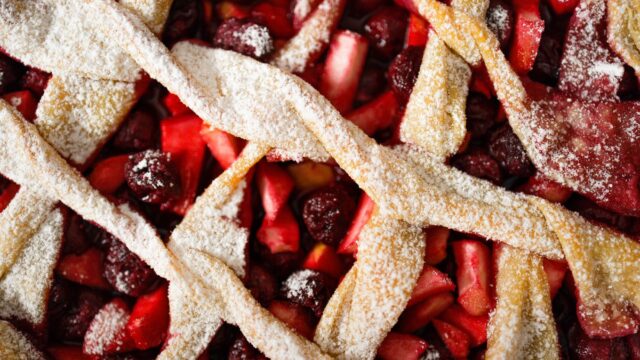
Judge doneness by the filling as well as the clock. The crust should be deep golden and the juice should bubble slowly and thickly through the vents in the center, not just at the edges. Cornstarch reaches full strength only after it boils, and a filling that bubbles only at the rim has not reached that point. If the edge browns too fast, cover it with a ring of foil. For times on other pies, see how long to bake a pie, from fruit to custard to frozen.
How can you prevent a soggy bottom crust?
Bake on a preheated baking sheet on a low oven rack, use a metal or glass pan rather than a thick ceramic dish, and keep the filling cool when it goes in. A juicy filling can also benefit from a partly baked crust, covered in how to blind bake a pie crust. Sprinkling a spoonful of fine breadcrumbs or crushed crackers over the bottom crust before filling soaks up a little juice.
Why is my cherry pie runny, and can I fix it?
A runny pie usually means one of three things: the pie was cut while warm, it did not bake long enough to boil the filling, or it had too little thickener for the amount of juice.
Cool the pie at room temperature for at least 3 to 4 hours before slicing. The filling continues to set as it cools, and a slice cut at 30 minutes will run. If a cooled pie is still loose, chill it for a few hours, which firms the filling. A pie that is too stiff or gluey had too much thickener, so use the low end next time.
Quick answers
Do I need to thaw frozen cherries for pie?
No. Thawing and draining lets you thicken the juice separately, while unthawed cherries need a longer bake and the upper end of the thickener range.
Can I swap cornstarch for flour?
Yes, at about double the amount. Expect a cloudier filling.
Should I add lemon juice and almond extract?
Lemon juice, about 1 tablespoon, brightens canned and frozen cherries, which can taste flat. Almond extract, about 1/4 teaspoon, is a classic pairing that many bakers add. Both are optional.