Sourdough Starter From Scratch: 7-Day Schedule and Signs It’s Ready
A sourdough starter takes 7 to 14 days to become active. Get a day-by-day feeding schedule, the signs it is ready to bake with, and fixes for common problems.
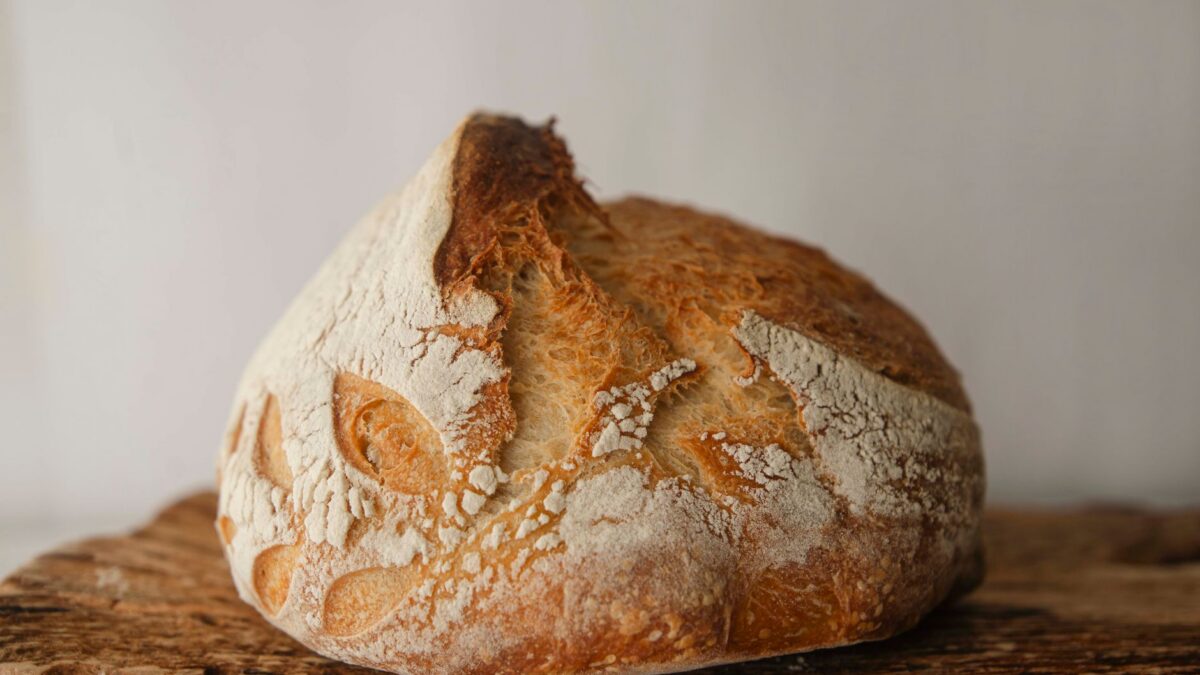
A sourdough starter made from flour and water takes about 7 to 14 days to become active enough to raise bread. It is ready when it doubles in volume within 4 to 8 hours of a feeding, is full of bubbles throughout, and smells pleasantly tangy and yeasty. Time alone does not make it ready; the behavior after feeding does.
You need only flour, water and a clear jar. Whole wheat or rye flour starts fastest because it carries more of the wild yeast and bacteria that drive fermentation. Once the starter is lively, you can switch to unbleached all-purpose or bread flour.
What do I need to start a sourdough starter?
- A clean glass jar or other clear container that holds at least 1 quart (about 1 liter), so you can see bubbles and rise.
- Whole wheat or rye flour to begin, then unbleached all-purpose or bread flour for later feedings.
- Water without chlorine taste. Filtered water, or tap water left uncovered for several hours, works well.
- A kitchen scale if you have one. Equal weights of flour and water give a thick, pancake-batter paste and make the schedule easier to repeat.
- A loose lid or a cloth held with a rubber band, so gas can escape.
Keep the jar somewhere around 75 to 80°F (24 to 27°C). A cold kitchen slows everything, and the same schedule may take a week longer.
What is the day-by-day schedule?
Feed at about the same time each day, and use weights where you can: 1/2 cup of flour is roughly 60 g, and 1/4 cup of water is roughly 60 g.
- Day 1: Stir 1/2 cup (60 g) whole wheat flour with 1/4 cup (60 g) water in the jar. Cover loosely and leave it at room temperature.
- Day 2: Stir and look for a few bubbles. Many starters show little change yet. Add nothing, or feed the same amount as on day 1 if the surface already looks active.
- Day 3: Keep about 1/4 cup (60 g) of the mixture and discard the rest. Add 1/2 cup (60 g) flour and 1/4 cup (60 g) water, and stir well.
- Days 4 and 5: Repeat the day 3 feeding once a day. The starter often rises, smells strongly, then goes quiet. That slump is normal.
- Days 6 and 7: Feed once or twice a day with all-purpose or bread flour. Mark the jar with a rubber band at the starter’s level and watch how far it climbs.
- Days 8 to 14: Keep feeding daily until the starter reliably doubles within 4 to 8 hours and stays bubbly. Some starters get there by day 7, others need two weeks.
What are the signs a starter is ready?
A ready starter shows several things together. It doubles in volume within 4 to 8 hours after a feeding, and it does so for at least two or three days in a row. The surface and the sides of the jar show many bubbles of different sizes, and the texture looks airy and a little stringy when you stir it. The smell is tangy, yeasty or slightly fruity, closer to yogurt or beer than to anything sharp or rotten.
The float test, where a spoonful floats in water, is a common shortcut. It can mislead, because a starter that has fallen after its peak may sink, and a very thick one may float for the wrong reasons. Rise and bubbles are the better guide.
Why is my starter not rising?
Cold is the most frequent cause. Move the jar to a warmer spot, such as the top of a refrigerator or an oven with only the light on, and check that the temperature stays around 75 to 80°F (24 to 27°C). Switching to whole wheat or rye flour for a few days can also wake a sluggish starter.
Other causes are a mixture that is too watery, strongly chlorinated water, and giving up too early. Bubbling in the first days often comes from bacteria that fade away, so a quiet period around days 4 and 5 does not mean the starter has failed.
Is the liquid or the smell a problem?
A gray or brownish liquid on top is called hooch. It means the starter is hungry. Pour it off or stir it in, then feed. A sharp smell like nail polish remover points to hunger too, and more frequent feedings usually fix it.
Fuzzy spots, or pink, orange or red streaks, mean contamination. Throw the whole jar out and start again with clean equipment. The USDA Food Safety and Inspection Service has guidance on mold in food, and a soft, wet food like starter is one that should not be saved.
What do I do with the discard?
Discard is the portion you remove before each feeding. It can go into pancakes, waffles, crackers or flatbreads. It also works in a simple batter baked in a pan, so the cake pans guide can help you pick a size. If you would rather not use it, throw it in the trash rather than down the sink, where it can thicken and clog pipes.
How do I keep a ready starter going?
Bakers who bake often keep the starter on the counter and feed it once or twice a day. Anyone baking weekly can store it in the refrigerator and feed it about once a week. Take it out the day before baking, feed it, and let it rise at room temperature until it is bubbly again. A starter that sat in the refrigerator for a long time may need two or three daily feedings before it is lively.
Once it is active, you can bake with it. Yeast baking basics carry over, and a recipe such as soft dinner rolls from scratch shows dough handling and shaping that you can adapt later.
Quick answers
Can I use all-purpose flour from day one?
Yes. It works, but the starter usually takes longer to become active than one begun with whole wheat or rye.
How much starter do I keep when I feed it?
A common routine keeps about 1/4 cup (60 g) of starter and adds 1/2 cup (60 g) flour and 1/4 cup (60 g) water. That keeps the amount manageable and the starter fed.
Can I use a metal spoon or lid?
A stainless steel spoon is fine for stirring. Avoid an airtight lid, since gas builds up and can crack a sealed jar.