Gluten-Free Flour for Baking: 1:1 Blends, Xanthan Gum and Why GF Muffins Work So Well
Muffins and quick breads are among the easiest bakes to make gluten-free, because they never needed much gluten. The blend, the binder and a short rest do most of the work.
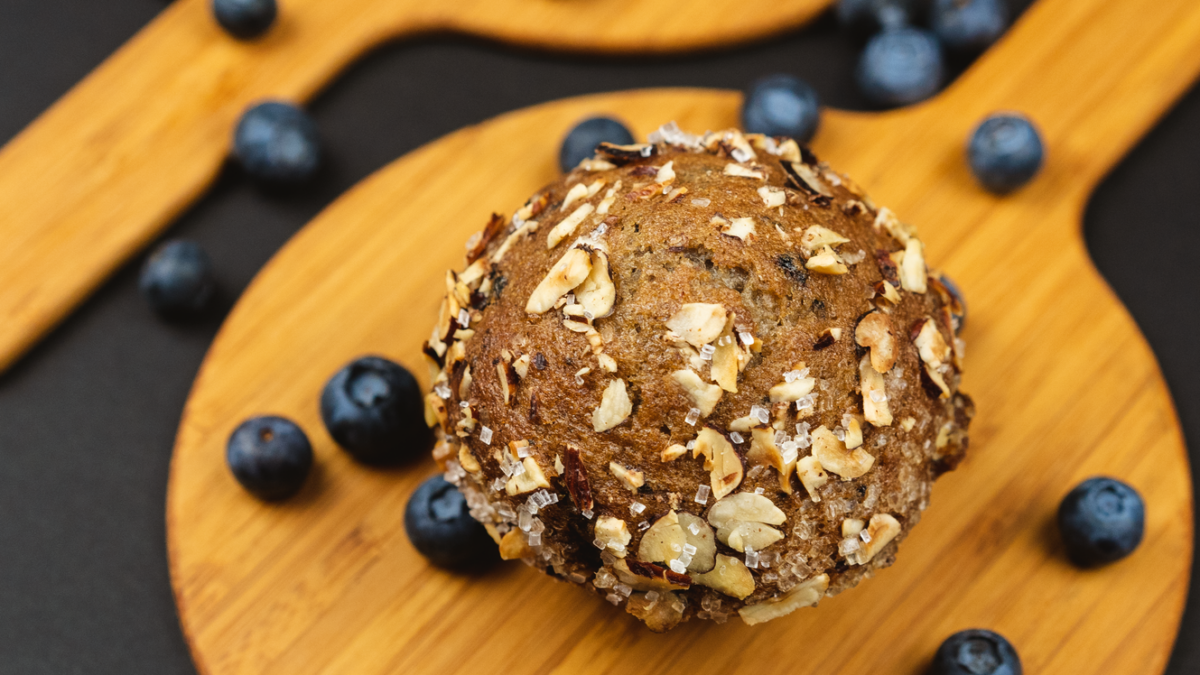
The simplest way to bake gluten-free is to swap all-purpose flour for a 1:1 (“cup for cup” or “measure for measure”) gluten-free flour blend, ideally by weight. Most of these blends already contain xanthan gum or another binder; if yours does not, a common guideline is about 3/4 teaspoon per cup for muffins and quick breads. Muffins convert especially well because they are meant to be tender, not chewy, so the missing gluten matters less.
What gluten does, and why muffins barely need it
Gluten forms when two wheat proteins, glutenin and gliadin, meet water and are mixed. It creates a stretchy network that traps gas and gives bread its chew. You can read more in what gluten does.
Muffin and quick bread recipes are designed to keep gluten low. That is why they tell you to stir gently and leave lumps; overmixing develops gluten and gives tunnels and toughness (see the muffin method explained). Their structure comes mostly from eggs, starch and chemical leavening. Take the wheat away and those other parts still do their jobs, which is why gluten-free muffins can be nearly indistinguishable from regular ones. Yeast breads, by contrast, depend on gluten and are much harder to convert.
Types of gluten-free flour
| Type | What it is | How to use it |
|---|---|---|
| 1:1 / measure-for-measure blend | Rice flours, starches (potato, tapioca, corn) and usually xanthan gum | Swap for all-purpose flour by weight or volume in muffins, cakes, cookies and quick breads |
| Gluten-free all-purpose blend without gum | Flours and starches only | For recipes that list xanthan gum separately; add the gum yourself |
| Single flours (almond, oat, sorghum, buckwheat, coconut) | One grain, nut or seed | Not 1:1 swaps; use recipes written for them. Coconut flour absorbs far more liquid |
| Starches (tapioca, potato, cornstarch) | Pure starch | Part of a blend only; on their own they bake gummy |
King Arthur’s chart lists its measure-for-measure gluten-free flour at 120 g per cup, the same as its all-purpose flour, which makes weight swaps simple. Other brands can weigh more or less per cup, so weighing gives the most consistent results.
Xanthan gum: when to add it, and how much
Xanthan gum is a binder that thickens batter and helps hold gas, partly standing in for gluten. Check your blend’s ingredient list first. If it already lists xanthan gum, guar gum or psyllium, do not add more; too much gives a gummy, rubbery crumb.
If your blend contains no gum, Bob’s Red Mill’s package guidance is a useful starting point:
| Bake | Xanthan gum per cup of gluten-free flour |
|---|---|
| Cookies | 1/4 teaspoon |
| Cakes | 1/2 teaspoon |
| Muffins and quick breads | 3/4 teaspoon |
| Yeast breads | 1 to 1 1/2 teaspoons |
Whisk the gum into the dry ingredients thoroughly so it does not clump.
How to convert a muffin recipe to gluten-free
- Pick a forgiving recipe: one with 2–2 1/2 cups (240–300 g) flour, eggs, and moist ingredients such as banana, pumpkin, yogurt or buttermilk.
- Weigh the blend to match the weight of all-purpose flour the recipe uses (at 120 g per cup). See how to measure flour if the recipe is in cups only.
- Check the binder and add xanthan gum only if the blend has none.
- Mix thoroughly. With no gluten to toughen, you can stir until smooth. Gluten-free batters are often stickier, so scrape the bowl well.
- Let the batter stand for about 20–30 minutes before baking, a technique many gluten-free bakers use so the rice flour and starches absorb liquid. It reduces grittiness and helps the tops dome. King Arthur recommends a long chill (overnight) for gluten-free cookie dough for the same reason.
- Bake at the recipe’s temperature and check doneness with a toothpick. Gluten-free muffins can need a few extra minutes and may look done on top before the center sets.
- Cool in the pan for 5–10 minutes, then move to a rack. Gluten-free crumbs are fragile while hot.
Common problems and fixes
| Problem | Likely cause | Fix |
|---|---|---|
| Gritty texture | Rice flour not fully hydrated | Rest the batter; choose a blend with finely milled rice flour |
| Gummy center | Too much gum, too much starch, or underbaking | Do not add extra gum to blends that include it; bake until a toothpick comes out clean |
| Crumbly, falls apart | No binder, or too little egg or fat | Add xanthan gum per the table; do not cut eggs |
| Dry and stale by day two | Gluten-free bakes firm up faster | Store airtight; freeze extras and reheat briefly |
| Dense, flat tops | Batter too thin, or old leavening | Rest the batter, check baking powder freshness |
Avoiding gluten cross-contact
For people with celiac disease, even small amounts of gluten can cause harm, so the ingredient swap is only half the job. Under FDA rules, foods labeled gluten-free must contain less than 20 parts per million of gluten (see the FDA gluten-free labeling page). In a shared kitchen:
- Use ingredients labeled gluten-free, including baking powder, oats, chocolate chips, vanilla and sprinkles.
- Use only oats labeled gluten-free; regular oats are often contaminated with wheat during growing and processing.
- Bake gluten-free items first, before wheat flour is in the air.
- Wash bowls, sifters, pans and beaters well; consider separate wooden spoons, sifters and silicone liners, which can hold flour residue.
- Use fresh paper liners and store gluten-free bakes separately, labeled.
This is general guidance, not medical advice. Anyone with celiac disease, a wheat allergy or other medical condition should follow their doctor’s or dietitian’s advice.
Bottom line
Use a 1:1 gluten-free blend, weigh it to match the all-purpose flour, and add xanthan gum only if the blend has none. Mix well, let the batter stand before baking, and check doneness with a toothpick. Muffins and quick breads are the best place to start, and careful handling of ingredients and equipment matters as much as the flour.
FAQ
Can I use almond flour as a 1:1 gluten-free substitute?
No. Almond flour has no starch structure and much more fat, and a cup weighs only about 96 g according to King Arthur’s chart. Use recipes written specifically for almond flour. Almonds are also a tree nut allergen.
Why do gluten-free muffins dry out so fast?
Rice flour and starches firm up quickly as they cool. Store them airtight once cool, and freeze any you will not eat within a day or two. A few seconds in the microwave softens them.
Do I need xanthan gum if I add psyllium husk?
Psyllium is another binder, so you usually do not need both. Many blends use one or the other. Adding both can make the crumb heavy.
Can I make gluten-free self-rising flour?
Yes. Add 1 1/2 teaspoons gluten-free baking powder and 1/4 teaspoon salt to each cup of 1:1 blend, as with regular self-rising flour.